The world has shifted under your feet, and for the first time in your professional life, the ground actually feels solid. For decades, you’ve been running a high-stakes marathon while wearing a weighted vest that nobody else could see. You’ve hit your KPIs, led the meetings, and climbed the ladder, all while feeling like you were reading from a script that everyone else had memorized instinctively.
Then comes the moment of realization. Maybe it was a viral video, a deep dive into a clinical article, or a therapist gently raising the possibility. Suddenly, the words form a question that redefines your entire history: "Wait, I’m autistic?"
Receiving a late-life or mid-career autism diagnosis is like finally being handed the manual to an operating system you’ve been trying to "hack" for forty years. It is a moment of profound disruption: the kind we champion here at Dr. Disruptor: but it is also a moment of intense clarity. The most important thing to remember in the wake of this discovery? This diagnosis changes everything about how you see yourself, but it doesn’t change a single thing about the talent that got you here.
The Masking Debt: The High Cost of "Passing"
For the high-performing professional, a late diagnosis usually follows years of expert-level masking. Masking is the process of suppressing natural neurodivergent traits to fit into a neurotypical world. You’ve learned how to make the "right" amount of eye contact, how to navigate small talk even when it feels like chewing glass, and how to ignore sensory overload so you don’t "make a scene" in the boardroom.
But masking comes with a heavy price tag: The Masking Debt.
The question is, how can someone achieve so much while being so fundamentally misunderstood by themselves? High-performers often compensate for their autistic traits with raw intellectual power and hyper-focus. You weren’t just doing your job; you were doing your job plus the exhausting mental labor of translating your internal world into a language the office understood.
This often leads to the "twice-exceptional" trap: being highly gifted while also having a disability that goes unrecognized. You might be the person who consistently submits world-class reports but finds themselves paralyzed by the noise of an open-plan office, or the executive who can solve a million-dollar logistical problem but forgets to eat because they’re in a deep flow state.

Solving the Lifelong Riddle
For many of us, the diagnosis is the missing piece of the puzzle. It’s the answer to the "Why am I like this?" question that has hummed in the back of our minds since grade school.
When you understand that your brain is wired differently, you can stop viewing yourself as "broken" and start viewing yourself as "differently optimized." This shift is a crucial component of self-love. It allows you to trade shame for strategy.
Imagine a professional who has spent years beating themselves up for "procrastinating" on a project. After diagnosis, they realize it wasn’t procrastination; it was executive dysfunction caused by an overwhelming, ill-defined task. Once they break the task down into sensory-neutral steps, the talent flows freely. The talent was never missing: the environment was just poorly configured for the hardware.
- It’s not a lack of empathy; it’s a difference in emotional intelligence.
- It’s not being "difficult"; it’s a need for clear communication.
- It’s not being "antisocial"; it’s a finite social battery that requires recharging.
Solving the lifelong riddle allows you to stop apologizing for your needs and start advocating for them.
Your Talent Was Never "Despite" Your Autism
There is a common fear among newly diagnosed professionals that the "autistic" label will somehow diminish their achievements. They worry that colleagues will look at their past successes and see them as fluke occurrences or, worse, pity them.
Let’s be incredibly clear: You didn't achieve your success despite being autistic. In many ways, you likely achieved it because of the way your autistic brain works.
The hyper-focus that allows you to master a new industry in a weekend? That’s an autistic trait. The pattern recognition that lets you spot a market trend months before your competitors? That’s neuro-innovation. The radical honesty and commitment to justice that makes you a trusted leader? That is part of the package.
Your talent is a permanent fixture of who you are. The diagnosis is simply the frame that helps the world see the picture more clearly. We need to challenge institutions directly to stop seeing neurodivergence as a deficit to be managed and start seeing it as a competitive advantage to be harnessed.

Re-engineering Your Professional Identity
Once the initial shock wears off, the real work begins: re-engineering your life to fit your brain. This doesn’t mean lowering your standards; it means optimizing your workflow.
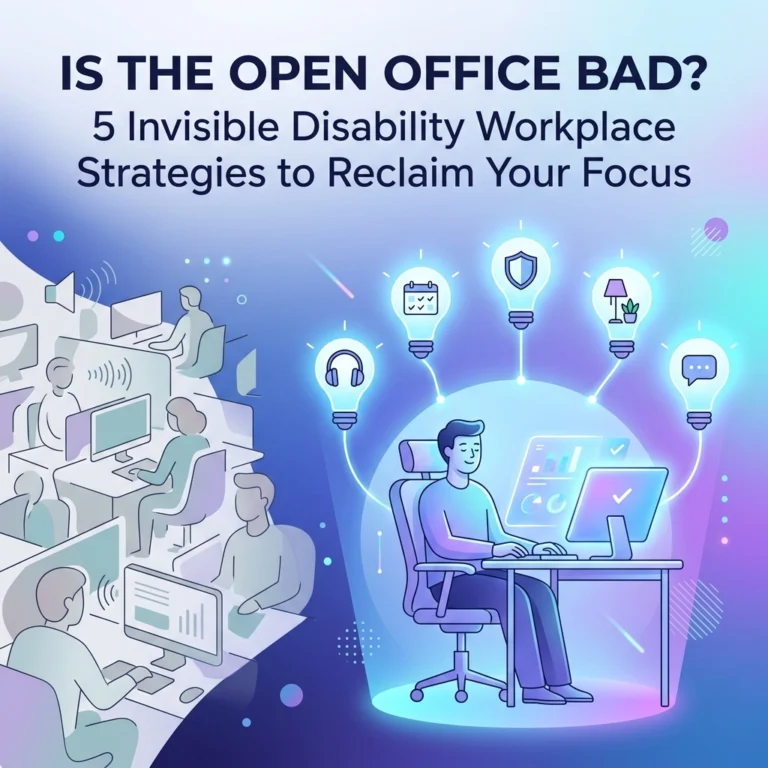
- Audit Your Sensory Environment: If the fluorescent lights in your office feel like a physical assault, it’s time for accommodations. Noise-canceling headphones aren't a luxury; they are a bridge to your best work.
- Redefine Communication: Be honest about how you process information. Do you prefer written briefs over "quick syncs"? Ask for them. It saves everyone time and prevents the "Masking Debt" from accruing.
- Own Your Narrative: You don’t have to "come out" to everyone at once, but owning your identity allows you to lead with authenticity. Authentic leaders inspire trust in ways that masked performers never can.
The goal is to move from a state of "surviving the workday" to "thriving in the career." By acknowledging your neurotype, you can finally stop fighting your brain and start collaborating with it.
The Power of the Neuro-Disruptor Community
A late diagnosis can feel lonely. You’re mourning the person you thought you were while trying to meet the person you’ve always been. But you don't have to do this in a vacuum.
At Dr. Disruptor, we believe that disability advocacy is not just about compliance: it’s about empowerment. We are building a community of high-performers, innovators, and rebels who are tired of the status quo. Whether you are navigating the corporate world, starting your own venture, or simply trying to find a sense of peace in your own skin, there is a seat for you at our table.
The world has shifted, but you are not falling. You are finally finding your footing. Your diagnosis isn't a limitation; it's a launchpad. It is the beginning of a life lived without the mask, where your talent is no longer obscured by the effort of pretending to be someone else.

Moving Forward with Radical Clarity
Why did it take so long to find out? Because you were "too successful" to be autistic in the eyes of a society that has a very narrow, outdated view of what neurodivergence looks like. They looked at your degrees, your salary, and your social status and thought, "They can't be autistic; they're doing too well."
They were wrong. You were doing well and you were struggling. Now, you can just do well.
As you move forward, remember that your worth was never tied to your ability to mimic neurotypicality. Your value lies in your unique perspective, your deep expertise, and your resilience. The riddle is solved. The hardware is identified. Now, let’s see what that talent can really do when it’s finally allowed to run at full capacity.
Welcome to the community. Welcome to the disruption. Welcome to yourself.