We built ramps. We installed elevators. We widened doorways. But when we moved into the cloud, we forgot to bring the accessibility with us.
Here's the reality: 15-20% of the global workforce is neurodivergent. That's one in every five people navigating ADHD, autism, dyslexia, or other cognitive differences. Yet our digital workspaces are designed as if everyone's brain processes information the same way. Spoiler alert: they don't.
The result? Digital sensory overload. Constant Slack pings. Cluttered interfaces that look like a teenager's desktop. An "always-on" culture that treats notification badges like performance metrics. For neurodivergent minds, this isn't just annoying: it's the equivalent of forcing someone in a wheelchair to take the stairs every single day.
It's time we talked about Digital Ramps.
What Are Digital Ramps?
Physical ramps aren't just nice-to-haves. They're entry points. They signal that a space was designed with intentionality, not as an afterthought. Digital ramps work the same way: they're structural choices that make technology navigable for different cognitive styles.
But here's where most companies get it wrong: they think a "neurodivergent-friendly workspace" means adding a meditation app to the benefits package or slapping a dark mode option on their software. That's not a ramp. That's a band-aid on a broken staircase.
Real digital accessibility means rethinking how we communicate, how we design interfaces, and how we structure work itself. It's not about creating a separate "accommodations corner" for neurodivergent employees. It's about building flexibility into the foundation so everyone has what they need to thrive.
Research from Stanford's Virtual Human Interaction Lab found that remote teams who explicitly discussed work preferences had 42% fewer misunderstandings. The lesson? Ask, don't assume. "What meeting format works best for you?" isn't a courtesy: it's a strategic question that unlocks better collaboration.
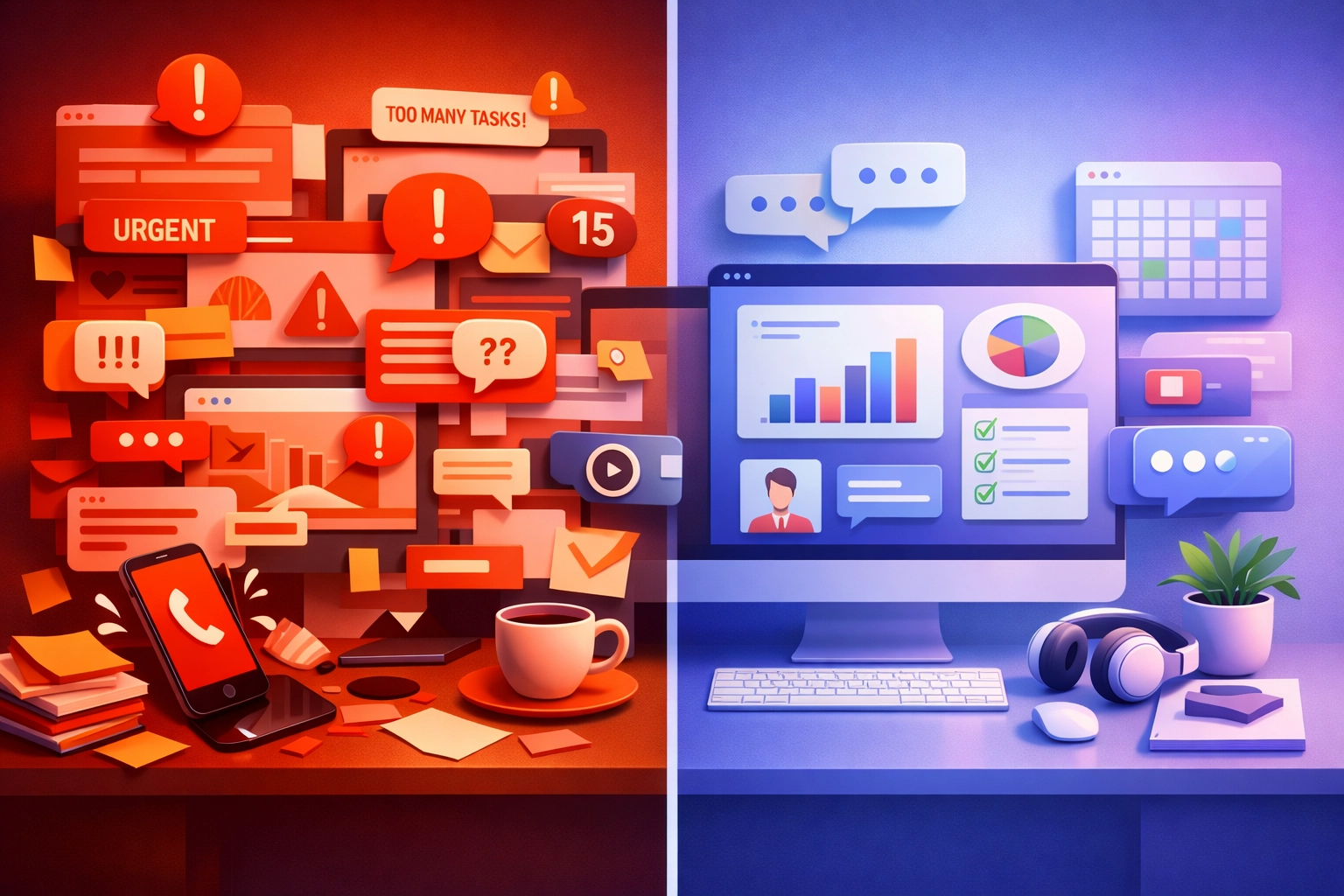
The Digital Sensory Overload Problem
Remember when open-plan offices were the villain? Constant noise, zero privacy, and the vague scent of someone's leftover fish lunch created a sensory nightmare for neurodivergent employees. We acknowledged that. We adapted.
Then we went remote: and somehow made it worse.
The "always-on" digital culture is the new open-plan office for the brain. Every notification is a tap on the shoulder. Every Zoom call with 47 unmuted participants is auditory chaos. Every cluttered project management dashboard is visual noise that makes it impossible to focus on what actually matters.
For neurodivergent minds, this isn't just distracting: it's cognitively exhausting. A 2022 study found that neurodivergent employees spent 30% less energy masking when working from home, but that benefit evaporated the moment video became mandatory. Forced cameras, instant response expectations, and synchronous-only collaboration don't just exclude neurodivergent workers: they actively drain them.
Let's be clear: the problem isn't remote work. It's how we've designed remote work. We took the worst parts of office culture: constant surveillance, performative productivity, rigid schedules: and digitized them without questioning whether they ever worked in the first place.
The 2026 Shift: Matured Flexible Working
Here's the good news: we're entering what workplace strategists are calling "Matured Flexible Working." After years of experimentation (and let's be honest, chaos), organizations are finally figuring out that flexibility isn't about letting people work in their pajamas: it's about recognizing that different brains need different conditions to do their best work.
The trends shaping 2026 include:
Hybrid rituals over rigid schedules. Companies are moving away from "three days in-office" mandates and toward intentional collaboration touchpoints. Need deep focus time? Block it. Want to brainstorm live? Schedule it. But don't force synchronous work when asynchronous would be more effective.
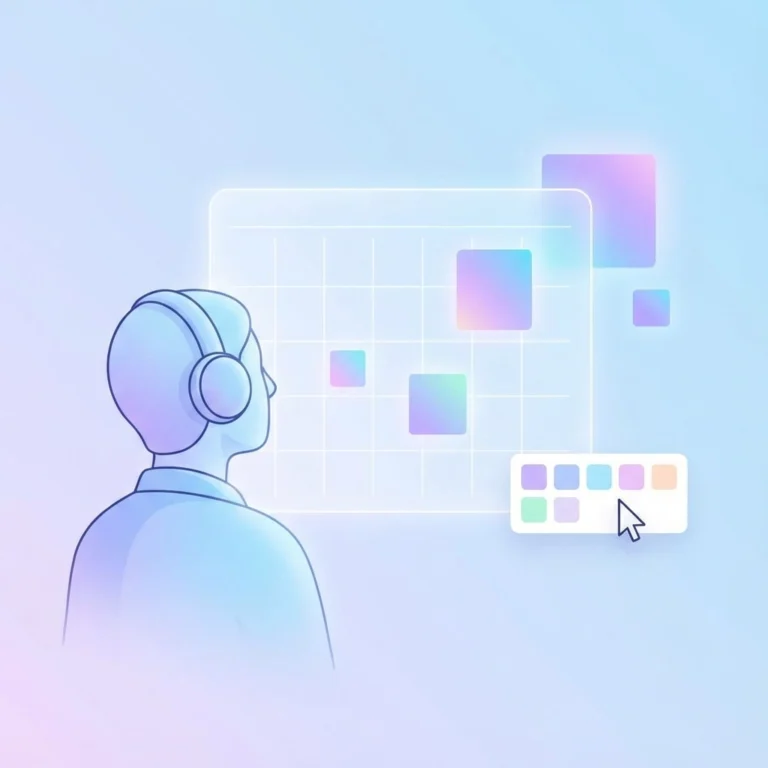
Customizable user interfaces (WCAG 3.0 compliant). The new Web Content Accessibility Guidelines recognize that one-size-fits-all design doesn't cut it. We're seeing platforms that allow users to adjust sensory input: brightness, contrast, notification density, even animation speeds: to match their cognitive needs.
Sensory-friendly digital environments. This isn't about aesthetics. It's about function. MIT researchers found that neurodivergent remote workers were 35% more productive when using project management tools with visual workflows and explicit deadlines. Clarity isn't just polite: it's profitable.
Three Actionable Strategies to Build Digital Ramps
Enough theory. Here's how to actually implement this stuff without requiring a PhD in accessibility design.
1. Default to Asynchronous Communication
Stop treating Slack like a straitjacket. Synchronous communication: instant messaging, live meetings, real-time collaboration: creates anxiety for neurodivergent employees who need time to process information before responding.
What this looks like in practice:
- Use shared documents for brainstorming instead of demanding instant responses
- Record meetings and share summaries for people who need to review later
- Normalize delayed responses (spoiler: most "urgent" messages aren't)
- Create a culture where "I need time to think about this" is respected, not punished
A Buffer study found that 91% of neurodivergent remote workers benefited when companies implemented policies that respected focus time through calendar blocking and notification pausing. This isn't about being slow: it's about being thoughtful.
2. Implement Digital Quiet Zones
You wouldn't blast music in the office during deep work hours. So why do we treat constant digital notifications as acceptable?
Digital Quiet Zones are scheduled blocks where notifications are paused, meetings are off-limits, and the expectation is zero interruptions. These aren't breaks: they're protected focus time where people can actually get work done.
Research from the University of Michigan found that meetings with structured turn-taking and built-in reflection moments increased neurodivergent participation by 56%. But sometimes the best meeting is no meeting at all. Build quiet hours into your team's calendar and watch productivity: and morale: skyrocket.
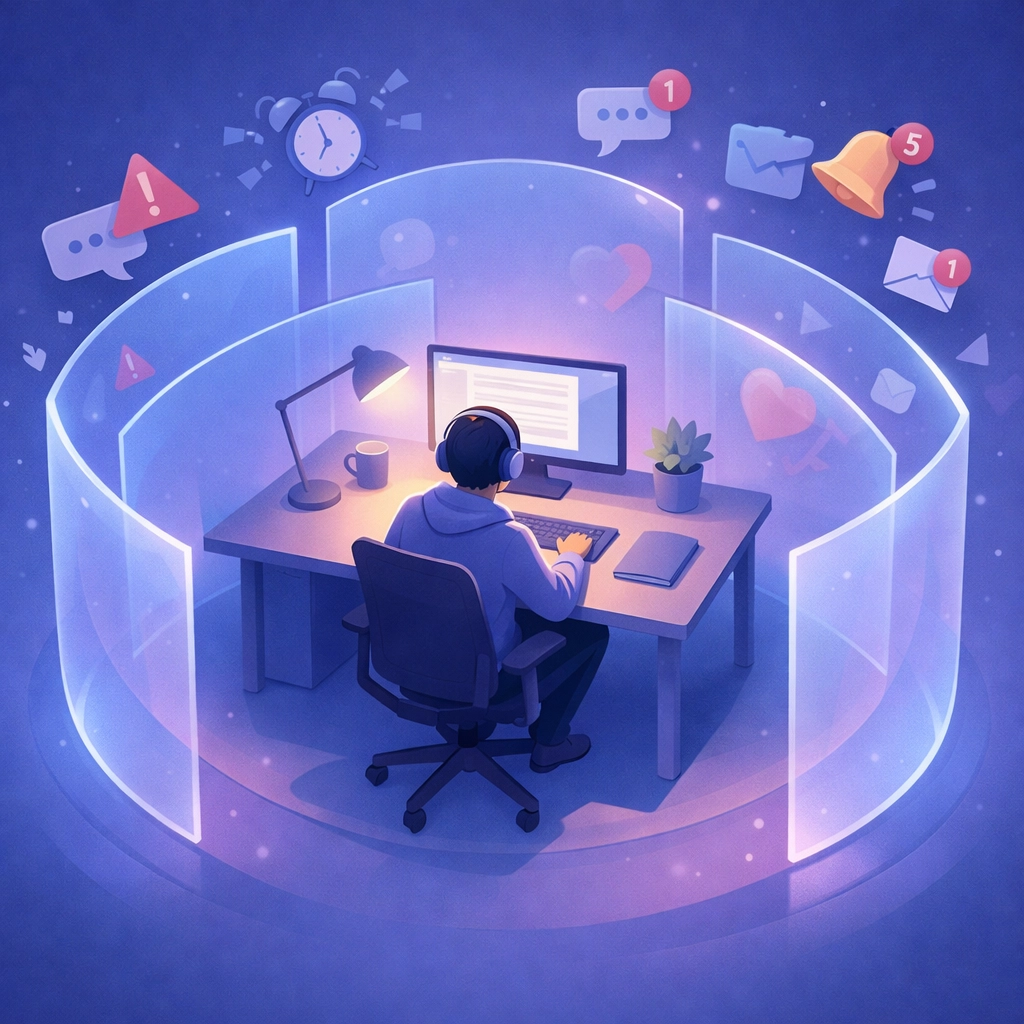
3. Use AI Tools for Real Cognitive Support (Not Gimmicks)
AI isn't just for automating your email responses or generating mediocre marketing copy. When used thoughtfully, it's one of the most powerful accessibility tools we have.
Examples that actually work:
- Automated transcription and summarization for people who process written information better than verbal
- Task prioritization algorithms that help ADHD brains figure out where to start
- Smart scheduling assistants that protect focus time and reduce decision fatigue
- Sensory adjustment tools that adapt interfaces based on cognitive load
Virtual coworking platforms like Flow Club and Deepwork are already doing this through "body doubling": creating structured accountability environments where neurodivergent individuals can control their sensory experience while still feeling connected to a team.
The key difference? These tools aren't forcing neurodivergent employees to conform to a neurotypical standard. They're meeting people where they are and providing scaffolding for success.
Moving Beyond Accommodations to Inclusion
Here's the uncomfortable truth: most companies treat neurodivergent accessibility like a favor instead of a baseline. They pat themselves on the back for offering "accommodations" while maintaining systems that inherently exclude 20% of the workforce.
Real inclusion means embedding flexibility into the design, not tacking it on as an afterthought. It means recognizing that sensory-friendly interfaces, asynchronous communication, and explicit workflows don't just help neurodivergent employees: they make work better for everyone.
Only 1 in 4 neurodivergent professionals feel accepted at work. That's not a pipeline problem. That's a design problem. And design problems have design solutions.
The most successful organizations in 2026 won't be the ones with the fanciest "neurodiversity programs." They'll be the ones who questioned the "always-on" culture, ditched performative productivity metrics, and built digital workspaces that actually work for human brains: in all their beautiful, varied forms.
So here's the challenge: Stop building stairs and calling it innovation. Build ramps. Build flexibility. Build systems that assume difference instead of demanding conformity.
Because when you design for the margins, you improve the experience for everyone. And that's not just good ethics: it's good business.
Ready to rethink how your digital workspace serves your team? Start by asking one simple question: "What would make this easier for you?" The answers might surprise you.