You know the sound. It’s that cheerful ping of an incoming calendar invite or notification chime cutting through the hum of another pointless morning stand-up. You click open your email, and there it is: “Your Voice Matters: Annual Employee Engagement Survey Now Open.”
A cold, familiar knot twists in your stomach. You remember last year. You spent forty-five minutes carefully articulating why your department was drowning in impossible deadlines, why toxic favoritism was bleeding talent, and how leadership’s constant restructuring was destroying morale. And what happened? Nothing. Except for a town hall where executives flashed a shiny green slide declaring that “overall satisfaction is up by 4%,” while ignoring every single substantive warning you poured into the text boxes.
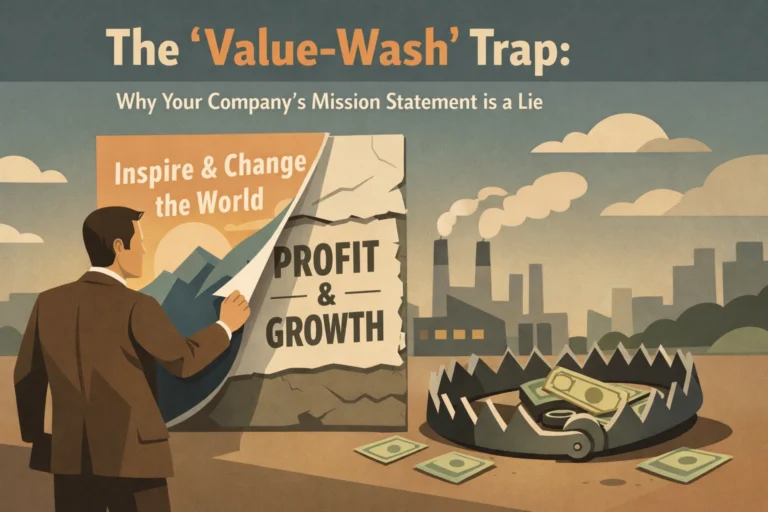
Welcome to the beating heart of the ColdPlayed Effect: where corporate culture has devolved into a high-stakes theatrical production, and your feedback is just scripted prop money.
The Glossary of Corporate Gaslighting: Official vs. Satirical
To survive the modern workplace, we need to call things by their actual names. Here is how management frames your annual engagement questionnaire versus the brutal, unfiltered reality of what is really happening behind the scenes.
| Official HR Spin | Satirical Workplace Reality |
|---|---|
| "Anonymous Pulse Check" | "The Digital Confession Booth" (where you confess your sins of low morale to an algorithm wired straight to your manager’s desk.) |
| "Constructive Feedback Channel" | "The Suggestion Shredder" (where raw emotional truth goes to die quietly behind a sleek executive summary deck.) |
| "Action-Oriented Insights" | "Blame-Shifting Theater" (where low scores are neatly reframed as "employee resistance to visionary growth.") |
As we explore in our foundational framework on the ColdPlayed Effect, organizations love the optics of listening because it costs nothing and shifts the burden of cultural rot back onto the exhausted workforce.

Three Ways Your Engagement Survey Is Rigged Against You
Why do companies keep deploying surveys if they never intend to change? Because the survey isn’t a diagnostic tool: it’s a containment strategy. Let’s break down the mechanics of the trap.
-
The Illusion of Anonymity
HR promises you that responses are strictly confidential. But let’s be honest: when a survey asks for your department, your tenure bracket, and whether you work hybrid or remote, your "anonymous" submission has a giant neon nametag attached to it. Employees quickly learn that expressing genuine dissent is a career hazard. As one reader recently told us, "I answered honestly about our toxic manager once, and suddenly I was put on a performance improvement plan for 'cultural misalignment.'" That’s not engagement: that’s surveillance. -
The Weaponized Metric
When scores drop across the board, leadership doesn’t examine their own executive dysfunction. Instead, they weaponize the data. They diagnose the organization with “communication fatigue” or “change resistance”: fancy corporate buzzwords designed to imply that you are the problem because you aren’t smiling wide enough while the ship takes on water. -
The Memory Hole
Remember the grand unveiling of last year's survey results? Neither does anyone else. The data vanishes into the executive ether, replaced six months later by another survey asking the exact same questions. It’s a perpetual feedback loop of lies, a soul-crushing barrage designed to exhaust your capacity for protest until you finally give up and learn to nod along.
Escaping the Trap: Tools for Survival and Sanity
Navigating an environment built on performative empathy takes more than just patience: it requires strategic detachment. When you need to decompress, organize your thoughts offline, and keep your personal notes entirely out of prying corporate servers, quick productivity tools like HeyPocket can help you securely capture your private reflections without leaving a digital footprint on company hardware.
And let’s face it: dealing with bureaucratic gaslighting and metaphorical office swamp creatures day in and day out is exhausting. When you finally log off for the weekend, you might need a well-deserved break or some retail therapy, so check out the ABCO Extermigator Swamp Friends Savings Network for deals that make dealing with real-world pests feel like a walk in the park compared to your Monday morning stand-up.

How to Tell if Your Company Is Changing: or Just Gaslighting You
If you want to know whether your leadership team is actually committed to authentic workplace culture or simply running another cycle of engagement theater, look for these concrete indicators:
- Real accountability vs. PR spin: Do leaders publicly own up to low scores without blaming the staff, or do they immediately pivot to toxic positivity?
- Actionable follow-through: Are specific, time-bound structural changes implemented, or do you just get another mandatory wellness webinar?
- Psychological safety: Can team members voice dissenting opinions in public meetings without facing subtle professional retaliation or exclusion?
If your workplace checks zero of these boxes, stop treating the survey like an open door. Treat it for what it is: a weather vane. Use it to gauge how stormy the corporate climate is, protect your energy, and remember that your worth is never defined by a rigged score on a management dashboard.

For deeper dives into real stories of workplace betrayal and liberation, tune into our discussions on the ColdPlayed Conversations podcast on Amazon Music/Audible, where we expose the gap between corporate slogans and human reality.
Have you ever filled out an engagement survey knowing it was completely performative, and what happened when you hit submit? Drop your stories in the comments below.