You know that sound. That sharp, digital ping that echoes through your home office or rattles against your mahogany desk at 4:45 PM on a Friday. You’ve just sent a detailed, three-paragraph proposal to your manager. You’ve laid out the risks, the budget requirements, and the desperate need for a definitive "yes" or "no."
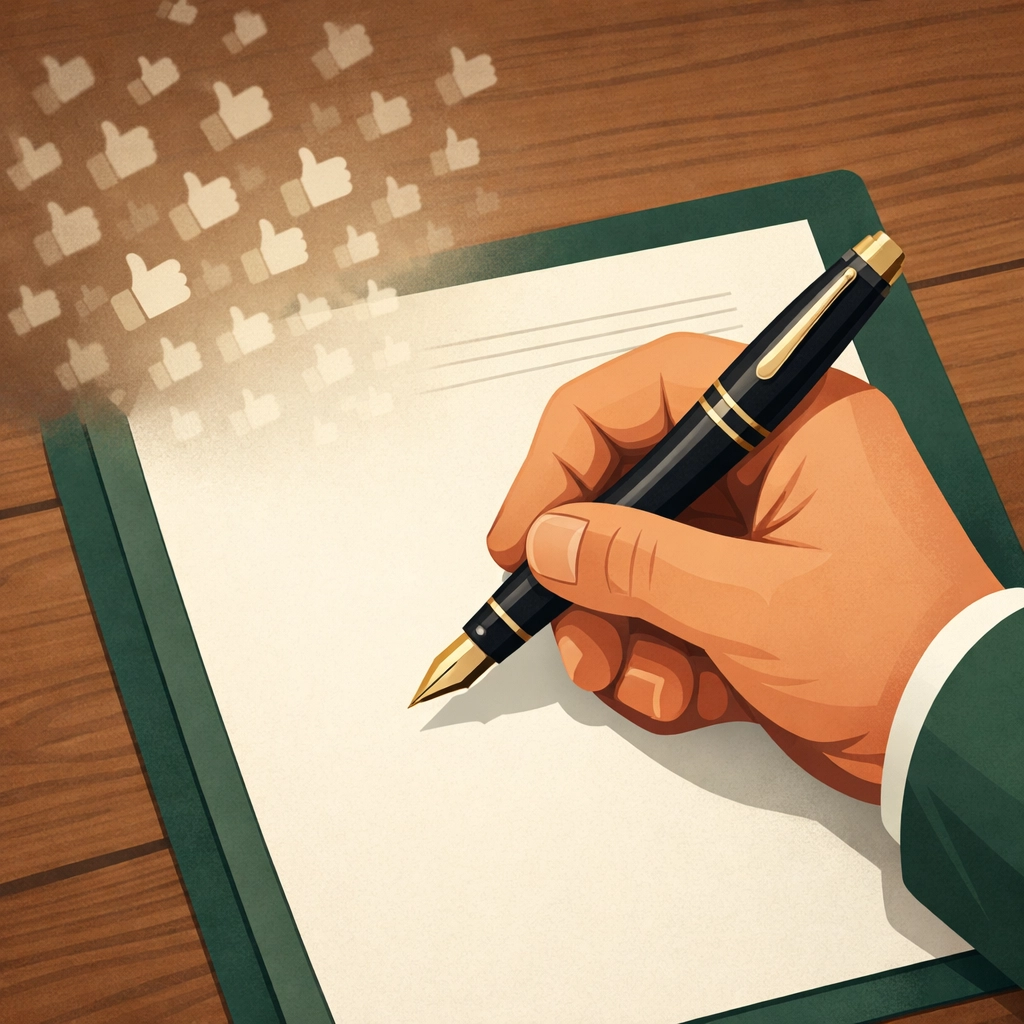
Three seconds later, it happens. A tiny, yellow, pixelated thumb appears at the bottom of your message.
In the world of Where the Rubber Meets The Road, we call this the Emoji Evasion. It feels like an approval. It looks like an approval. But when the project goes south six months from now and the auditors start sniffing around, that little yellow icon will offer you exactly zero protection.
Welcome to the era of Emoji Approvals, where leadership accountability goes to die in a sea of low-resolution graphics.
The Illusion of Agreement
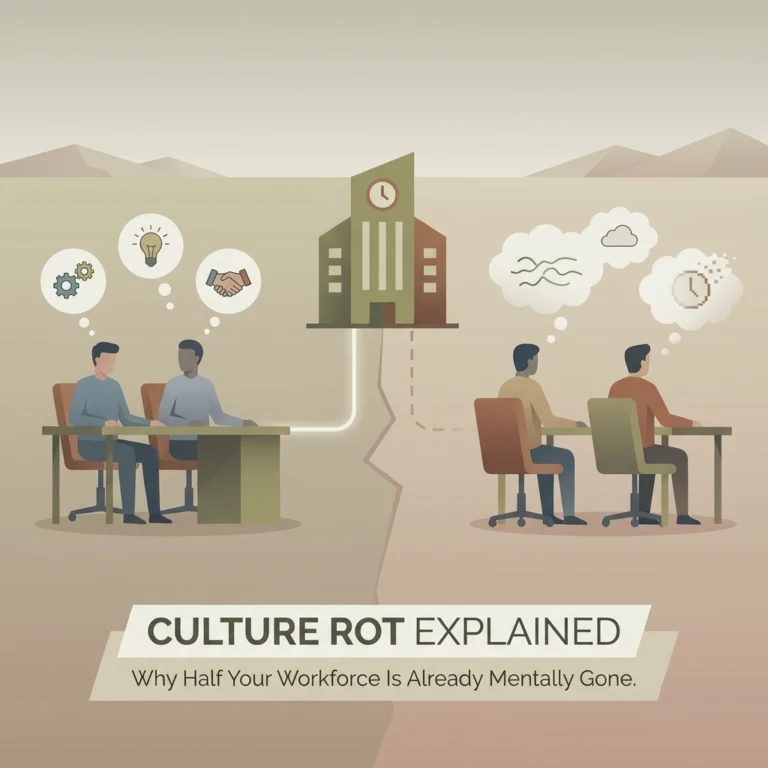
We live in a corporate landscape that is increasingly ColdPlayed, a term we use to describe that hollow, polished, yet fundamentally broken workplace culture where everything looks functional on the surface but is rotting underneath. You can find more about this in our Culture Rot Explained in Under 3 Minutes.
The 👍 emoji is the ultimate weapon of the non-committal manager. It is a "choose your own adventure" for the recipient. Does it mean "I have read this"? Does it mean "I agree with everything you said"? Or does it mean "I am currently at my kid’s soccer game and I’m clicking this just to make the notification disappear"?
"I thought the thumb meant he authorized the $50k spend. He claims he was just acknowledging that he saw the message. Now I’m the one in the hot seat." , Direct quote from a senior project manager who learned the hard way.
This isn't just a minor communication glitch. It is a fundamental Trust Crisis. When we trade named decisions for icons, we lose the thread of responsibility that keeps an organization from spinning into chaos.

The Legal Reality: The Thumb is Mightier Than the Pen
For years, managers thought they were being "agile" or "efficient" by using emojis. They thought they were staying out of the "paper trail." They were wrong.
Recent court rulings have begun to strip away the "it was just an emoji" defense. In the South West Terminal case, a judge ruled that a thumbs-up emoji was, in fact, a valid form of contract acceptance. The court viewed it as an "action in electronic form" that expressed consent.
But here is the raw truth: while a court might eventually side with you, your internal HR department probably won't. In the corporate world, an emoji is a Liability Shield for the person sending it and a Career Trap for the person receiving it.
The Official Corporate Narrative: "Emojis foster a friendly, informal environment that breaks down hierarchical barriers and promotes rapid alignment."
The ColdPlayed Reality: "I don’t want my name attached to this decision in a searchable text format, so I’ll use a cartoon hand to maintain plausible deniability when this inevitably hits the fan."
Why Managers Love the 👍 (And Why You Should Hate It)
Why has the emoji become the default language of the C-suite? It’s not because they love "expressive communication." It’s because it allows them to occupy a state of Quantum Leadership, where they have simultaneously approved and not approved your request until the exact moment an outcome is observed.
- The Speed Trap: Managers are rewarded for "responsiveness," not "accuracy." Clicking a thumb takes 0.5 seconds. Writing "I approve the budget as outlined in section 3" takes 15 seconds. In the race to look busy, accuracy is the first casualty.
- Accountability Avoidance: A signature is a commitment. A 👍 is a vibe. You can’t audit a vibe.
- The Power Play: By responding to a well-thought-out 500-word proposal with a single icon, the manager re-establishes the power dynamic. It says my time is too valuable to even give you a full sentence.
This is a classic example of The Myth of the Open Door. Sure, the door is "open" on Slack, but if the only thing coming out of that door is a yellow thumb, are you actually being heard?

The Digital Death by a Thousand Cuts
When a workplace shifts from verbal or written confirmation to Emoji Approvals, the culture begins to erode. We call this a digital death by a thousand cuts. Every time a real decision is replaced by a reaction, the psychological safety of the team takes a hit.
The employee is left in a state of constant Interpretive Labor. They spend hours wondering:
- Was that a 'good job' thumb or a 'stop talking to me' thumb?
- If I move forward and it fails, can I print out a screenshot of a thumb and bring it to my performance review?
- Why did she use the 'check mark' for Bob but only the 'thumbs up' for me?
This ambiguity is where workplace gaslighting thrives. It allows leaders to move the goalposts whenever they feel like it because the "goalpost" was never a written requirement, it was just a tiny graphic of a hand.
Breaking the Cycle: How to Demand Real Decisions
If you’re tired of living in the Emoji Evasion, you have to change the rules of engagement. You have to force the "rubber to meet the road." Here is how you do it without looking like a "digital dinosaur":
- The Follow-Up Requirement: When you receive a 👍 on a critical decision, reply immediately with: "Thanks for the thumb! Just to be 100% clear for the project log, I’m taking that as a formal approval of the $10k budget increase discussed in paragraph 2. Correct?"
- Establish a "Signature" Protocol: If a decision involves money, legal risk, or a change in scope, state at the end of your message: "Please reply with 'Approved' or 'Confirmed' if you are okay with this path. (Emoji reactions won't be tracked in the project log)."
- Call Out the Ambiguity: If you're in a leadership position, stop using the thumb for approvals. Use it for acknowledgment only. Tell your team: "If I give a thumb, it means I’ve seen it. If I type 'Yes,' it means go."
For a deeper dive into how these communication breakdowns lead to systemic decay, check out The Growth Mindset Mirage.

The Bottom Line
An emoji is not a contract. It is a shortcut. And in leadership, shortcuts usually lead to a cliff.
If you want to build a culture of real trust and real results, you have to bring back the Named Decision. You have to be willing to put your name next to a choice and own the outcome: good or bad. Anything less is just Is Your Workplace ColdPlayed?.
We talked about this in depth on our latest podcast episode. If you want to hear us tear into the "Emoji Approval" culture even further, listen to the full episode here: Where the Rubber Meets The Road – Emoji Approvals.
Leadership isn't about being "liked" or being "quick." It’s about being clear. Stop hiding behind the yellow icons and start leading with your words.
Have you ever been burned by an "Emoji Approval"? Or are you a manager who thinks the thumb is the greatest invention since sliced bread? Drop a comment below or hit us up on social media. Let’s get real about how we talk to each other.
Want to make sure your blog reaches the people who actually need to hear this? Check out our guide on Effective Blog Promotion Strategies.