Clap-clap-clap.
There it is, the sound of a staged town hall applause. Loud enough to sound enthusiastic. Coordinated enough to feel suspicious.
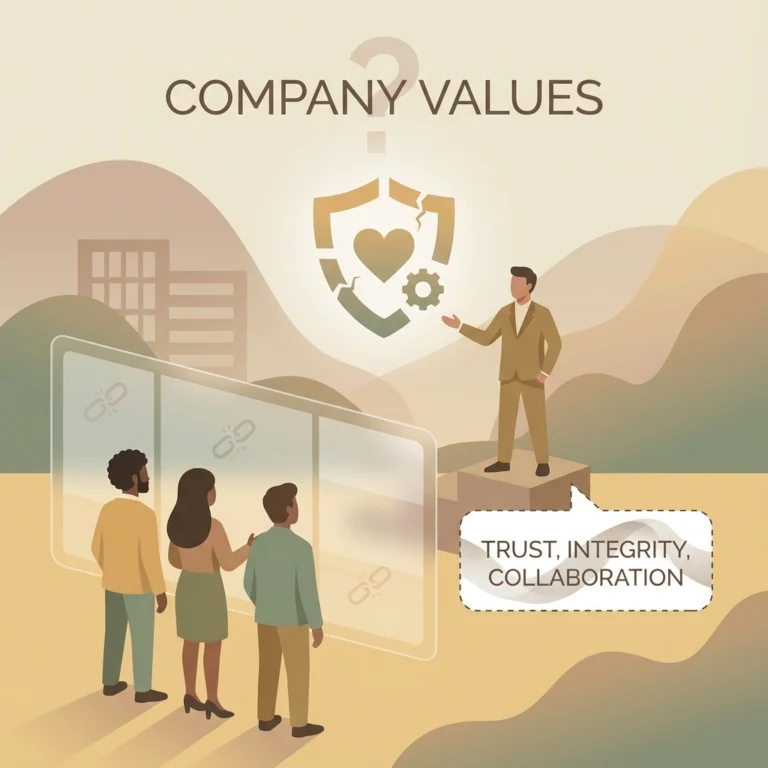
The CEO smiles. The screen behind them flashes cheerful words about people-first culture, belonging, and trust. Someone says, “We’re listening.” Someone else says, “Our employees are our greatest asset.”
And then the meeting ends.
The cameras go off. The chat closes. The same broken workload, retaliation, silence, and digital death by a thousand cuts remain exactly where they were.
Welcome to The Theater of Corporate Care, the recurring rituals companies stage to look human while continuing to operate as a toxic workplace culture.
First, a definition from the ColdPlayed Glossary
At Where the Rubber Meets The Road, we call the distance between what a company says and what employees actually experience the corporate values gap.
When that gap becomes normalized, polished, and aggressively defended, it becomes the ColdPlayed Effect.
The company says “care.” The system delivers exhaustion.
The company says “speak up.” The person who speaks up becomes the problem.
The company says “we’re a family.” Translation: please provide family-level loyalty at employee-level pay and shareholder-level sacrifice.
This is performance theater, organizational rituals designed to create the appearance of care without accepting the cost of practicing it.
So how do we tell whether a workplace ritual is real, or just another painted backdrop?
1. Town halls: “Radical transparency” with a carefully edited script
What it’s sold as
A town hall is supposed to be a direct line between leadership and employees. Leaders share the truth, answer hard questions, and create alignment.
In theory, it is a chance to see the humans behind the titles.
What it actually is
In a ColdPlayed culture, the town hall becomes a corporate infomercial with better lighting.
The difficult questions are filtered. The answers are vague. The layoffs are called “strategic realignment.” The impossible workload is described as “an exciting opportunity to do more with less.”
The applause is encouraged. The dissent is managed.
“They answered every question except the ones we actually asked.”
That sentence captures the whole production.
The tell that exposes it
Look at what happens after the town hall.
- Are difficult questions answered in writing?
- Are commitments assigned to specific leaders?
- Are deadlines and follow-ups visible?
- Do decisions change, or does the language simply become more polished?
If leadership loves the microphone but hates accountability, you are not witnessing transparency. You are witnessing values gaslighting with a PowerPoint deck.
2. Employee surveys: “Your voice matters” sent to a data graveyard

What it’s sold as
The employee survey is presented as a safe, anonymous channel for truth.
You are invited to rate trust, leadership, workload, inclusion, engagement, and psychological safety. The company promises to listen.
What it actually is
Sometimes it is useful data. Sometimes it is a decorative questionnaire that converts human pain into a colorful bar graph.
Employees report burnout. The company celebrates a 3% improvement in “engagement sentiment.”
People describe retaliation. Leadership announces that the survey proves employees feel “generally positive.”
You tell the truth, and the organization turns your truth into a branding asset.
“They asked what was wrong, then used our answers to prove everything was fine.”
That is the survey trap: listening becomes a performance when the result is treated as a communications problem instead of an operating problem.
The tell that exposes it
Watch for the gap between survey language and resource allocation.
If the survey says workloads are unsustainable but headcount is cut again, the data was never meant to guide action. It was meant to decorate the annual culture report.
A real listening system shows:
- Public themes, not just vague scores
- Specific owners for specific problems
- Progress updates over time
- Protection for employees who raise concerns
- A willingness to publish uncomfortable findings
Without those things, the survey is just a suggestion box with better software.
3. Offsites: “Team connection” in a rented paradise
What it’s sold as
Offsites promise connection, creativity, and a break from the daily grind.
There may be trust exercises, inspirational speakers, catered meals, and a scenic backdrop designed to make everyone temporarily forget the 11 p.m. Slack messages.
What it actually is
An offsite can become a pressure cooker wrapped in branded merchandise.
Employees are encouraged to “bring their whole selves” while carefully avoiding any topic that might make leadership uncomfortable. The executive team talks about shared purpose. Managers quietly compare who looked enthusiastic enough.
The company spends thousands on a bonding ritual while refusing to address the manager who humiliates people in meetings.
What good is a trust fall when nobody trusts the person holding the rope?
The tell that exposes it
Ask whether the offsite creates permission for honest disagreement, or simply demands emotional participation.
Red flags include:
- Mandatory vulnerability with no protection afterward
- Team-building exercises used to avoid structural problems
- “Culture” sessions disconnected from promotions, pay, and workload
- Pressure to perform gratitude
- A return to normal toxicity the moment everyone gets back home
Real connection is not manufactured by matching T-shirts. It is built when people can tell the truth without risking their livelihood.
4. Open-door policies: “Come to me anytime” behind seven layers of red tape

What it’s sold as
The open-door policy is supposed to make leadership accessible.
The message is simple: if something is wrong, come directly to us.
What it actually is
In many workplaces, the door is technically open, but the path to it is guarded by assistants, managers, HR protocols, scheduling delays, and a quiet warning not to “go over someone’s head.”
This is one of the classic signs in our free guide, 10 Signs You’re in a ColdPlayed Culture.
You are told to speak up. Then you are told to follow the chain of command. Then the chain of command sends you back to the person you reported.
A revolving door. A beautifully framed dead end.
The tell that exposes it
Notice what happens when someone uses the policy in good faith.
- Are they protected from retaliation?
- Is the concern investigated independently?
- Does leadership address the behavior, or question the employee’s tone?
- Are repeat offenders held accountable?
If access exists only for agreeable feedback, it is not an open door. It is a customer-service window for compliments.
5. Wellness programs: “We care about your well-being” with a yoga mat over the fire
What it’s sold as
Wellness programs offer meditation apps, walking challenges, mental health webinars, fruit in the break room, and perhaps a cheerful reminder to breathe.
Wellness can be valuable. Nobody is against people having support.
What it actually is
The problem begins when wellness is used as a substitute for fixing the conditions making people unwell.
The company adds a mindfulness session while maintaining impossible deadlines. It offers resilience training while rewarding abusive managers. It sends a burnout article to employees who are working weekends because the team is understaffed.

“They gave us a meditation app instead of giving us enough people to do the work.”
That is not wellness. That is corporate BS wearing athletic clothing.
The tell that exposes it
Ask a basic question: does the wellness initiative reduce the source of the harm?
Authentic care may include:
- Sustainable workloads
- Predictable time off
- Fair staffing
- Psychological safety
- Respectful management
- Clear boundaries around after-hours communication
If the answer is no, the program may simply be teaching employees how to tolerate the machine.
6. Listening sessions: “We want unfiltered feedback” with a filter already installed
What it’s sold as
Listening sessions promise intimacy and honesty. Leadership gathers a small group, asks open-ended questions, and invites employees to describe what is really happening.
This sounds human. It can be human.
What it actually is
In a performative culture, the session becomes emotional extraction.
Employees share stories of exclusion, workplace betrayal, broken promises, and values gaslighting. Leaders nod gravely. Someone takes notes. A follow-up email thanks everyone for their “courageous participation.”
Then nothing changes.
Or worse: the details are used to identify who complained.
What kind of listening requires employees to provide vulnerability while leadership provides no accountability?
The tell that exposes it
Look for the aftercare.
A legitimate listening session produces:
- A summary of what was heard
- Clear boundaries around confidentiality
- Specific actions
- A timeline
- A second meeting to report back
- Consequences when leaders fail to act
Without a feedback loop, a listening session is just a confession booth where the organization gets absolution for free.
How to step out of the theater
If these rituals feel familiar, start by trusting the pattern: not the slogan.
Take practical steps:
- Compare stated values with decisions about pay, workload, promotions, and discipline.
- Keep a private record of dates, commitments, changing explanations, and repeated behavior.
- When appropriate and lawful, document meetings and preserve your notes. A tool such as HeyPocket can help capture conversations and create searchable summaries: but always follow consent requirements, local recording laws, and workplace policies.
- Take the free ColdPlayed quiz to identify recurring warning signs.
- Read Dr. Eric Fishon’s book, The ColdPlayed Effect, for the framework behind the corporate values gap and a path toward authentic leadership.
- Listen to the broader conversations through Audible, Spotify’s ColdPlayed Conversations, and Amazon Music.
- If you are rebuilding financially or practically after a damaging workplace experience, explore the Swamp Friends Savings Network for savings and resource options.
For leaders, the solution is less complicated: and more uncomfortable:
- Stop staging care and start measuring harm.
- Publish what employees say, including the parts that make leadership look bad.
- Tie values to budgets, promotions, staffing, and consequences.
- Protect dissent instead of rewarding emotional compliance.
- Make follow-through visible.
That is authentic leadership. It is not always polished. It is not always flattering. But it is real.
The show ends when we stop applauding it
The ColdPlayed Effect survives because corporate rituals create just enough hope to keep people doubting their own experience.
Maybe the next town hall will be different.
Maybe the next survey will matter.
Maybe the wellness program means they finally care.
Maybe the open door is actually open.
Sometimes it is. But hope should not require us to ignore evidence.
If you have been ColdPlayed, you are not imagining the gap between the poster and the practice. You are noticing the machinery behind the curtain.
Have you experienced a town hall, survey, offsite, open-door policy, wellness program, or listening session that felt more like performance theater than care?
What was the tell?
Share your story with us: and with someone who needs to hear it. We are collecting real experiences for an upcoming book on corporate BS, toxic workplace culture, workplace betrayal, and the road back to trust.
Affiliate disclosure: Some links in this post are affiliate links. If you purchase through them, we may earn a commission at no additional cost to you. We only share resources we believe may be useful.