The modern corporate landscape was built for a specific type of brain: a linear, single-threaded processor that loves color-coded spreadsheets and "quick syncs." But for about 30% of the white-collar workforce, that’s not how the internal hardware operates. For us, it’s not a single thread; it’s a chaotic, vibrant, and high-speed symphony of the 50 tabs open brain.
If you’ve ever felt like your brain is a browser with too many windows open, music playing from an unknown source, and a "low memory" warning flashing in the corner, you know the struggle. The problem isn’t that we aren’t productive. The problem is the "translation tax." We spend half our energy translating our non-linear, brilliant, spider-web thoughts into the rigid, boring, and "professional" dialect required by the corporate world.
The world has shifted, but the way we work hasn't kept up. Until now. AI isn't just a tool for writing emails faster; it is the ultimate cognitive translator. It is the bridge between the beautiful chaos of a neurodivergent mind and the standardized expectations of the modern workplace.
The Internal Orchestra of the 50 Tabs Open Brain
Let’s be real: having the 50 tabs open brain is a superpower that feels like a curse. It means you can see connections that others miss. You can solve a problem in Marketing by using a concept you read about in a biology journal three years ago. You are a natural innovator because your brain refuses to stay in its lane.
However, the "translation tax" is real. When a manager asks for a "concise summary," your brain provides a 14-page epic of interconnected theories. When a client wants a "straightforward update," your mind is busy calculating the 17 ways the project could fail in the next six months.

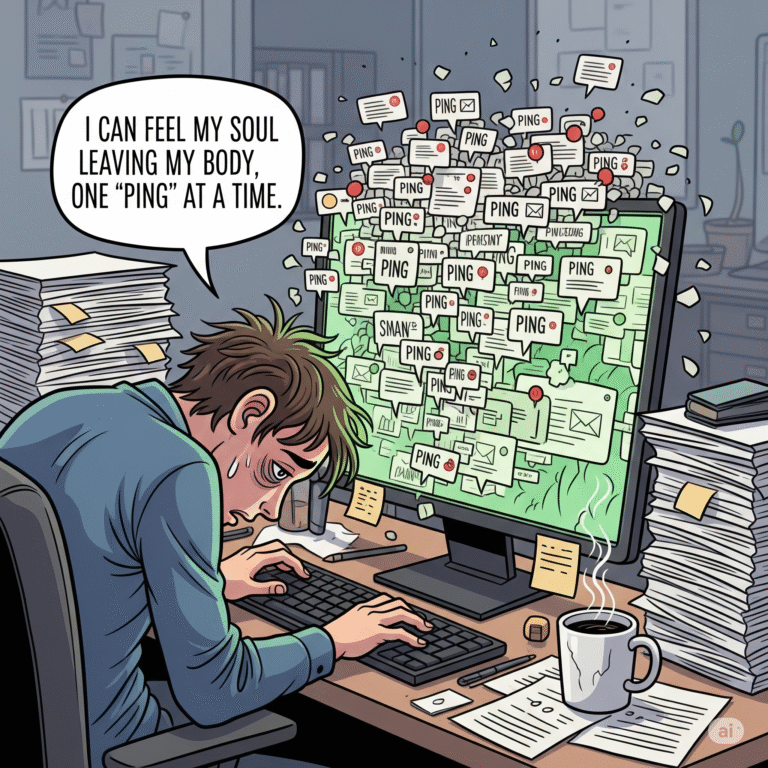
The effort it takes to suppress the "extra" tabs just to appear "normal" is what leads to burnout. It’s not the work that’s exhausting; it’s the mask. Why should we spend hours agonizing over the tone of a Slack message when our real value lies in the high-level strategy firing off in tab #42? This is where the cognitive translator steps in to change the game.
The Hidden Tax: What "Professionalism" Actually Costs Us
Institutional standards of "professionalism" often act as a barrier to entry for the silent 30% of the workforce living with invisible disabilities like ADHD, dyslexia, or autism. Companies often pat themselves on the back for "diversity and inclusion" initiatives while still demanding that every employee communicate in the exact same way.
The question is, how much brilliance is being lost because someone couldn't format a PowerPoint perfectly? Or because their emails sounded "too blunt"?
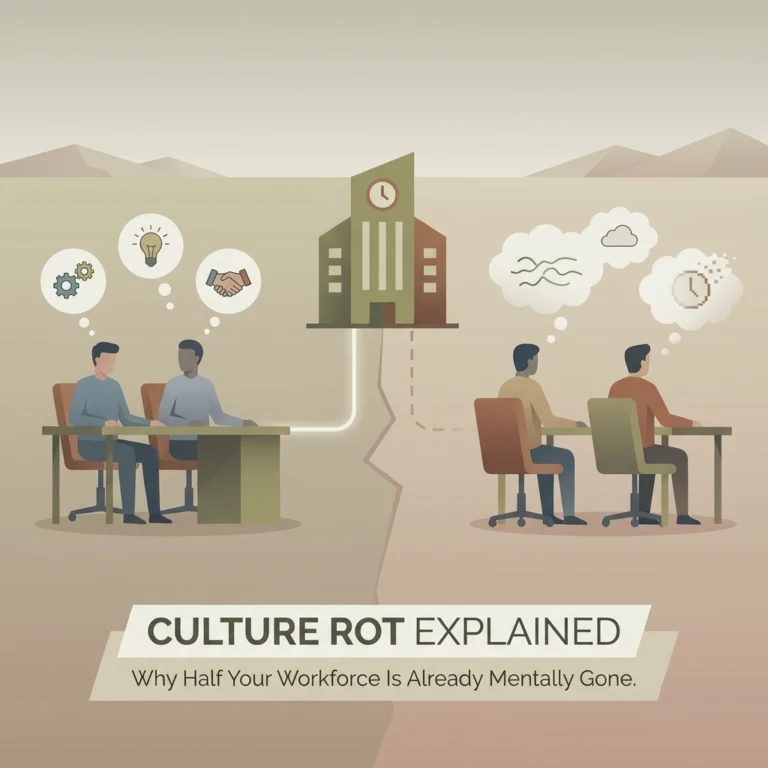
We are currently living through an inclusion illusion. Organizations claim to want "out-of-the-box thinkers," but they immediately try to put those thinkers back into the box the moment they start working. This mismatch is why so many neurodivergent professionals feel like they are constantly swimming upstream.
But what if we stopped trying to change the brain and started changing the interface?
Enter the Cognitive Translator: Why AI is Your New Best Friend
AI is often framed as a threat to jobs or a way to "cheat" at work. At Dr. Disruptor, we see it differently. For someone with the 50 tabs open brain, AI is a piece of assistive technology. It is a cognitive translator that takes your raw, unfiltered, brilliant ideas and polishes them into whatever "standard" the world requires.
Think of it like this:
- The Brain: Provides the spark, the complex connections, and the deep insights (The Creative Director).
- The AI: Handles the formatting, the tone-policing, and the linear structuring (The Executive Assistant).
When you use AI as a cognitive translator, you aren't replacing your intelligence. You are freeing it. You are outsourcing the "boring" part of your brain's processing power so you can focus on the "tabs" that actually matter.

The Silent 30% and the ROI of Accessibility
Let’s talk numbers, because leadership loves numbers. Nearly 30% of the white-collar workforce has an invisible disability. These are your top performers, your creative leads, and your "fixers." Yet, many of them are one "performance review" away from quitting because they are exhausted by the manual translation of their thoughts.
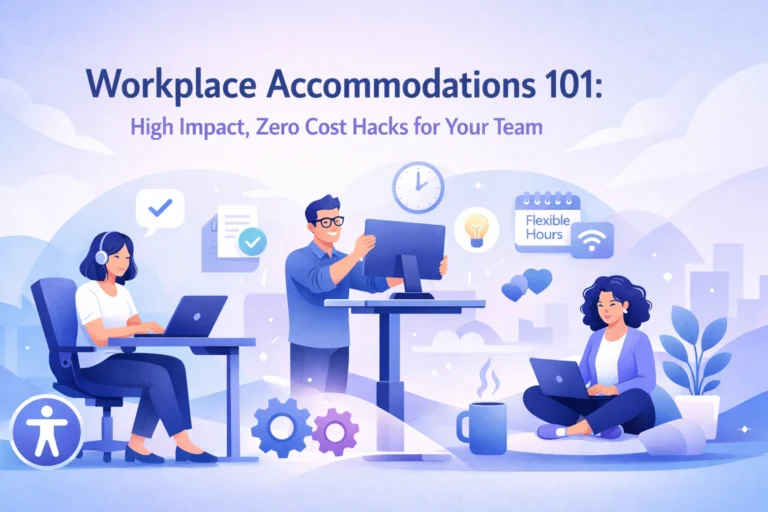
Here is the kicker: 58% of workplace accommodations cost exactly $0.
Integrating AI as a recognized productivity tool isn't just "nice": it's a high-ROI business move. When you give a neurodivergent employee a cognitive translator, you reduce their burnout risk and increase their output. You are essentially giving them back the 40% of their brain that was previously dedicated to "trying to sound normal."
Why are we still forcing people to struggle with linear tasks when we have technology that can bridge the gap? The organizations that realize this first are the ones that will win the talent war of the next decade.
Practical Magic: Turning Chaos into Output
How does one actually use AI as a cognitive translator? It’s simpler than you think. It’s about moving from "doing the work" to "directing the work."
- Brain Dumping to Structured Briefing: Instead of staring at a blank page, record a 5-minute voice memo of all your scattered thoughts. Feed the transcript to an AI and ask it to "Extract the top 3 priorities and create an action plan."
- Tone Polishing: If you struggle with the nuances of "corporate-speak," write your honest (perhaps too blunt) thoughts and ask the AI to "Rewrite this for a sensitive stakeholder while maintaining the core request."
- Information Synthesis: Use AI to summarize the 15 tabs of research you have open into a cohesive narrative. It helps you see the "forest" when your brain is currently hyper-focused on one specific "tree."
These aren't shortcuts; they are lifelines. They allow the 50 tabs open brain to function at its highest frequency without crashing the system.

Challenging the "Standard"
It’s time to directly challenge the institutions that view AI-assisted work as "lesser." If a person with a physical disability uses a ramp, we don't say they "cheated" at entering the building. So why, when a person with a cognitive difference uses a cognitive translator to navigate a digital space, do we raise an eyebrow?
The "standard" is a relic of the industrial age. We are in the information age, and information doesn't care about your formatting: it cares about its impact. We need to stop valuing the process of "suffering through the task" and start valuing the outcome of the insight.
Reclaiming Your Energy: A Call to Disruptors
If you are reading this and nodding along because you currently have 17 browser tabs open and a half-written email that’s been sitting there for three hours: this is your sign. You don’t need to try harder; you need to leverage the tools available to you.
You are a Disruptor. Your brain is a high-performance engine that just happens to speak a different language than the rest of the office. Use your cognitive translator. Protect your energy. Focus on the brilliance that only you can provide, and let the algorithms handle the mundane.
We talk about this in-depth on our latest episode of Plugged in: The Disruptor Podcast. We dive into the intersection of tech and neurodiversity, and how you can stop being a "victim" of your own brain and start being its CEO. Check it out on our portfolio or wherever you get your podcasts.

The future of work isn't about being more "normal." It's about being more human, supported by the best technology we’ve ever built. Let’s close those unnecessary tabs and start building something that matters.
Are you ready to stop translating and start leading?
Join the conversation and learn how we’re redefining what it means to be a professional in a neurodiverse world. Stay tuned to Dr. Disruptor for more insights on how to flip the script on disability and empowerment.
Want to learn more about how we’re disrupting the status quo? Check out our author profiles to meet the team behind the movement.