The Work-Life Balance Scale: AColdplayed Illusion
Introduction
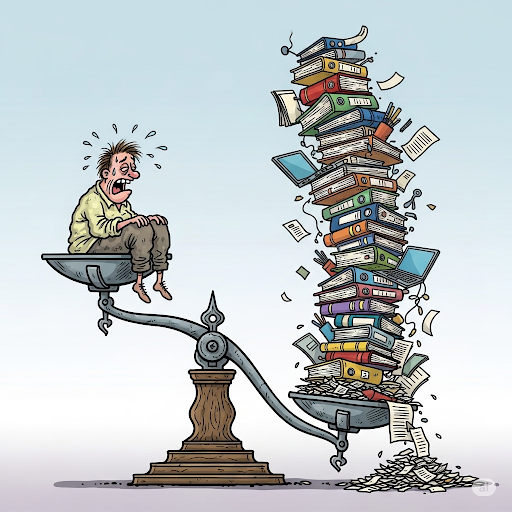
Take a look at the image above. Does it reflect your own work life?
We’ve all heard the corporate mantra of “work-life balance.” It’s a phrase repeated sooften that it has become acornerstone of employee wellness initiatives. Yet, in what I call a“Coldplayed” workplace, this concept is often nothing more than a performative illusion—anideal preached from the top, but never intended to be achieved.
The truth? The scale is permanently, and absurdly, tilted.
The Anatomy of an Imbalance
This image isn’t just a cartoon—it’s a sharp depiction of the Coldplayed Effect. Let’sbreak it down:
1. The Weight of Work
On the right side of the scale sits a looming mountain of “KPIs,”“deadlines,” and“strategic deliverables.” It’s not a pile of papers—it’s the crushing weight of unsustainableexpectations. Companies talk about efficiency but consistently reward overwork
2. The Price of “Balance”
On the other side, the lone employee struggles. He isn’t enjoying family time or pursuinghobbies. Instead, he’s simply holding his ground—a desperate, futile attempt at equilibrium in asystem rigged against him. Here, “life” is reduced to quiet suffering.
3. The Missing Element
Notice what’sabsent: the manager who proclaims “we value well-being.” We know he’sthere—out of sight—while quietly piling more weight onto the already buckling scale.
The Coldplayed Illusion
In a Coldplayed workplace, work-life balance is a bait-and-switch.Companies hand outyoga passes or kombucha taps as “wellness solutions” while fueling the very stress these perksare meant to soothe.
It’s a culture that demands you be a “visionary,” “resilient,” and “agile” team player—yetdrowns you in an endless, zero-sum cycle of tasks.The balance scale becomes a prop in thischarade: discussed endlessly, never truly leveled.✅
✅Conclusion: What Balance Should Mean
A healthy workplace isn’t about owning a scale. It’s about building a system that makesbalance possible in the first place
True work-life balance comes from a culture that supports realistic workloads, respectspersonal time, and fosters well-being that is more than a buzzword.
✨Balance should not be performative—it should be real
Newsletter Tip: You could add a pull quote to highlight the key message, such as:
“A healthy workplace isn’t about being given a scale—it’s about being givena system that allows for genuine balance.”