The world has shifted. We spend more time than ever tethered to glowing screens, tucked into chairs that weren't built for our unique anatomies, and pushing our bodies to meet deadlines that don't care about our spinal health. For those of us living with chronic pain, this shift isn't just an inconvenience; it’s a daily battle. The traditional 9-to-5 grind is often a "double-edged sword": on one side, the desire to be productive and contribute, and on the other, the physical toll that sedentary work takes on a sensitive nervous system.
If you’ve ever felt like your body was a cage by 3:00 PM, you’re not alone. But what if I told you that the secret to reclaiming your rhythm isn't a week-long vacation or a total career overhaul? What if the secret lies in the tiny, intentional gaps we create in our day? This is the core of the micro-break revolution, a lifestyle shift that focuses on sustainable ergonomics and radical self-awareness.
Why Your Body is Asking for a "Minute"
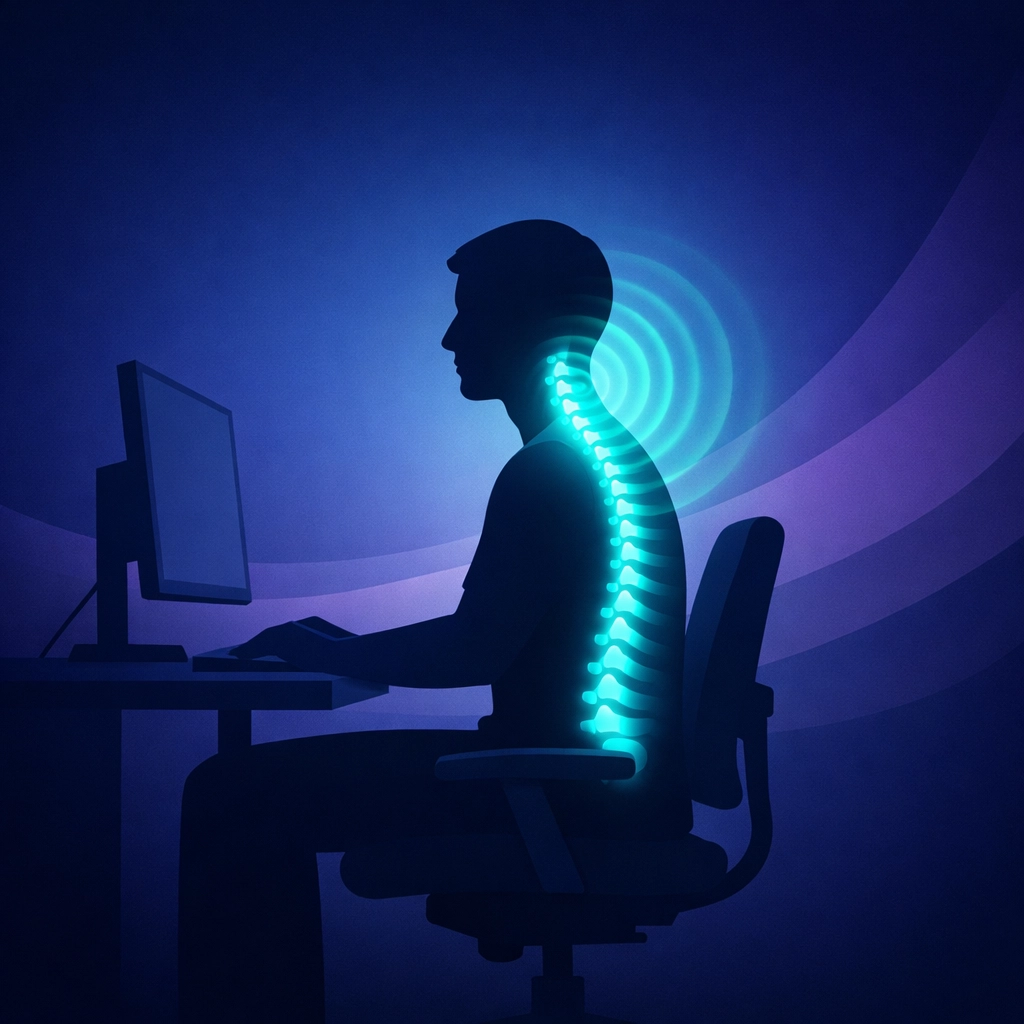
Chronic pain isn't just a physical sensation; it’s a communication system. When we sit for hours, our muscles tighten, circulation slows, and our pain receptors start firing off warning flares. For someone managing a disability or a chronic condition, these flares can quickly escalate into full-blown flare-ups that derail an entire week.
Micro-breaks: brief 2-3 minute pauses of light movement taken every 30 minutes: act as a "circuit breaker" for these pain signals. Research shows that these pauses are highly effective because they interrupt prolonged immobility. By regularly activating your muscles, you prevent the postural strain that accumulates in the neck, shoulders, and lower back.
But it’s about more than just stretching. It’s about reclaiming your rhythm. When you step away, even for 120 seconds, you are telling your nervous system that it is safe to relax. You are shifting from a state of "survival productivity" to a state of sustainable engagement.
The Neurobiology of the Pause
You might ask, "How can two minutes really make a difference?" The answer lies in how our brains process pain. Chronic pain often creates a feedback loop where the brain becomes hyper-sensitive to any signal from the body. By implementing the micro-break revolution, you are actually performing a bit of "biological rewiring."
Over time, these small daily habits reduce inflammation and restore your body awareness: your "proprioception." Many chronic pain sufferers subconsciously limit their movement to avoid discomfort, which paradoxically makes the body more sensitive to pain. Regular micro-breaks teach your body that movement is not the enemy. They help regulate stress hormones like cortisol, which are known to amplify pain perception.
At Dr. Disruptor, we believe in innovation when it comes to managing our health. We don't just accept the status quo of "pushing through the pain." We look at the science and find ways to make it work for us, not against us.
Building a Foundation with Sustainable Ergonomics
A micro-break is only as effective as the environment you return to. If you spend your "on" time hunched over a laptop on a kitchen chair, your two-minute stretch is fighting an uphill battle. This is where sustainable ergonomics comes into play.
Your workspace should be an ecosystem that supports your body. This means having tools that adapt to you, rather than forcing you to adapt to them. I often tell people that investing in your setup is a form of self-love.
To get the most out of your workstation, consider these essentials:
- Vertical Mice: Traditional mice force your forearm to twist. A vertical mouse keeps your hand in a natural "handshake" position, reducing carpal tunnel strain.
- Split Keyboards: These allow your shoulders to stay open and relaxed.
- Adjustable Footrests: Never underestimate the power of keeping your hips at the right angle.
If you’re looking to upgrade your setup, I highly recommend checking out the ergonomic gadgets on Toolsurf. Using a Toolsurf referral link to grab a high-quality laptop riser or a lumbar support cushion can be the difference between a productive afternoon and a painful one. These gadgets aren't just "cool tech"; they are the infrastructure of your well-being.

Challenging the Institutional "Stiffness"
Why is it that so many workplaces still view frequent breaks as a sign of "slacking"? Many HR departments "pat themselves on the back" for offering a standard office chair and a generic pamphlet on posture. But for those of us in the disability community, these "one size fits all" solutions are often insufficient.
We need to challenge the idea that productivity is measured by how long your seat is occupied. A student who consistently submits assignments late might not be procrastinating: they might be managing chronic fatigue and spinal pain that makes sitting for three hours straight an impossibility.
True accommodation isn't just about hardware; it's about culture. It's about creating an environment where taking three minutes to do shoulder rolls or a "cat-cow" stretch is seen as a professional best practice, not a distraction. We need to normalize reclaiming your rhythm in the middle of the workday.
Your Micro-Break Toolkit: Actionable Steps
Ready to start the micro-break revolution at your own desk? Here are a few movements you can incorporate every 30 minutes:
- The Shoulder Reset: Gently roll your shoulders up to your ears, then back and down. Visualize your shoulder blades sliding into your back pockets.
- The 20-20-20 Rule: To reduce eye strain (which often leads to neck tension), every 20 minutes, look at something 20 feet away for 20 seconds.
- Seated Cat-Cow: While sitting, place your hands on your knees. Inhale as you arch your back and look up; exhale as you round your spine and tuck your chin.
- The Standing March: If you are able, stand up and march in place for 60 seconds. This "resets" your circulation and wakes up your glutes.
- The "Toolsurf" Check: Take a moment to adjust your monitor height or move your Toolsurf ergonomic footrest. Even a one-inch shift in position can relieve pressure on your lower back.
Reclaiming Your Rhythm Daily
The journey toward better chronic pain management isn't a sprint; it’s a series of intentional steps. By embracing sustainable ergonomics and the micro-break revolution, you are taking control of your physical narrative. You are moving from a place of being "disrupted" by pain to being a "disruptor" of the systems that cause it.
The question is, how can you start today? Maybe it’s setting a timer on your phone for every 30 minutes. Maybe it’s finally ordering that vertical mouse from Toolsurf to save your wrists. Or maybe it’s just giving yourself permission to stop and breathe.
At Dr. Disruptor, led by Eric Fishon, we are committed to your empowerment. We believe that disability isn't a lack of ability; it's an opportunity for a different kind of innovation.
As you move forward, remember: your body is not a machine. It’s a living, breathing system that deserves grace, movement, and support. By reclaiming your rhythm, you aren't just managing pain: you are choosing to thrive in a world that wasn't always built for you.
Let's keep disrupting the standard and building a future where everyone has the tools to succeed, one micro-break at a time. Stay empowered, stay moving, and don't forget to take that break. You’ve earned it.