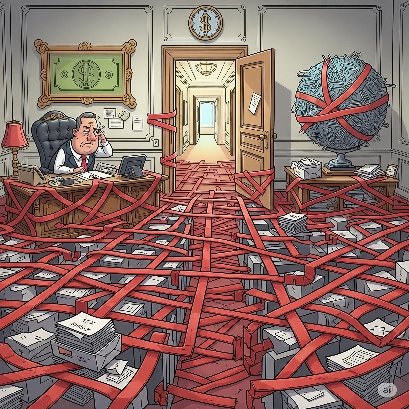
The world has shifted in ways that many professional structures are still struggling to navigate. For those of us navigating the professional landscape with invisible disabilities, the modern workplace often feels less like a ladder to success and more like a trek through a desert of burnout. We are frequently told to "push through" or "grind harder," but what happens when the very tools meant to support us are the ones gathering dust or, worse, don't exist at all?
As we enter this season of Lent, a period traditionally defined by reflection, sacrifice, and renewal, it provides a unique and powerful framework for self-advocacy. This isn't just about religious tradition; it’s about the universal human need to pause and audit the internal and external barriers that hinder our growth. If you are living with an invisible disability, the "unseen" is your daily reality. This season, I want to challenge you to use the spirit of reflection to conduct a comprehensive audit of your workplace accommodations.
The Desert of Burnout and the Weight of the Unseen
Why do we wait until we are on the brink of exhaustion to ask for help? In many corporate cultures, there is a silent expectation that we should only request accommodations when we are failing. This "crisis-mode" approach to disability advocacy is a recipe for disaster. It leads straight into the desert of burnout, a place where your creativity, energy, and mental health dry up because the environment wasn't built to sustain you.
Reflecting on the unseen means looking at the micro-friction points in your day. Think about the employee who consistently struggles with mid-afternoon brain fog due to an autoimmune condition but continues to schedule high-stakes meetings during that time because "that’s when everyone else is free." Or consider the neurodivergent professional who spends 30% of their mental energy filtering out the hum of an open-office floor plan, leaving them depleted by noon.
These aren't signs of weakness; they are signs of a mismatch between the environment and the individual. Lent encourages us to look inward and identify what is holding us back. In the context of your career, the things holding you back are often the accommodations you haven't asked for yet.

Why Reflection is a Tool for Professional Resilience
Professional resilience isn't about having a "tougher" skin; it’s about building a smarter support system. When we talk about workplace resilience, we are talking about the ability to sustain high-level performance without sacrificing our well-being. This requires a level of honesty that can be uncomfortable.
An accommodations audit is, at its core, an act of self-care and professional strategy. By identifying where your current setup is failing, you are breaking down internal barriers: the guilt, the fear of "being a burden," and the imposter syndrome that often accompanies invisible disabilities.
The question is, how can we achieve this without feeling overwhelmed? We do it by treating our career like an ecosystem. Every ecosystem needs specific conditions to thrive. If the soil is dry, you don't blame the plant; you change the irrigation.
Conducting Your Lenten Accommodations Audit
So, how do you actually "audit" your workplace? It starts with a shift in perspective. Instead of looking for what is "wrong" with you, look for what is "wrong" with the workflow. Use this season to systematically evaluate three key areas: Physical Environment, Digital Workflow, and Social/Managerial Expectations.
1. The Physical and Sensory Environment
Even in a remote or hybrid world, your physical space dictates your output. Ask yourself:
- Is the lighting causing sensory overwhelm or migraines?
- Do I have the ergonomic support needed for chronic pain management?
- Am I working in a space that allows for "deep work" without constant interruption?
2. The Digital Workflow and Mental Load
This is where the "unseen" often hides. Digital fatigue is real, especially for those with ADHD or processing disorders.
- Are your notification settings driving you toward a state of constant hyper-vigilance?
- Do you have access to assistive technologies like speech-to-text or AI summarization tools?
- Is your Google Calendar color-coded to help manage executive function, or is it a monochromatic wall of stress?
3. The Social Contract and Communication
This is often the hardest part of the audit because it involves other people.
- Does your manager understand that "flexible hours" aren't a perk, but a functional necessity for your medical appointments or energy cycles?
- Are you being forced into "performative presence" in meetings where a recorded update would suffice?
- Is there a clear, documented process for when you need to step away for health reasons?

Breaking Internal Barriers: Moving Beyond the "Bare Minimum"
Many organizations like to pat themselves on the back for being "inclusive" simply because they have an HR handbook that mentions the ADA. But as we know at Dr. Disruptor, true empowerment goes beyond compliance. Compliance is the floor; empowerment is the ceiling.
The internal barrier we often face is the belief that we should be grateful for the "bare minimum." If your company provides a chair but refuses to let you work from home during a flare-up, they aren't being inclusive: they are being compliant. There is a difference.
Reflecting on the unseen requires you to challenge the institution, but also to challenge your own narrative. Why do you feel like you have to "earn" an accommodation through extra hours or perfect performance? Accommodations are the tools that allow for that performance in the first place. They are the lifelines that prevent us from sinking into the sand.
Resilience Through Community and Strategy
You don't have to navigate this audit alone. One of the most powerful ways to build workplace resilience is to find your community. Whether it's through a formal Employee Resource Group (ERG) or an informal network of peers, sharing what works can shorten the learning curve for everyone.
At Dr. Disruptors, we focus on the intersection of technology, advocacy, and personal growth. Whether it's through reviewing the latest assistive tech or providing a roadmap for disability advocacy, the goal is always the same: to move from surviving to thriving.

Actionable Steps for Your Audit
To make this reflection tangible, I recommend sitting down this week and creating a "Stability Map." This is a simple list divided into two columns:
- Drains: What specific tasks, environments, or interactions leave you feeling depleted? (e.g., "Back-to-back Zoom calls with no breaks.")
- Sustenance: What specific changes would allow you to recover or maintain your energy? (e.g., "20-minute 'blackout' periods between meetings.")
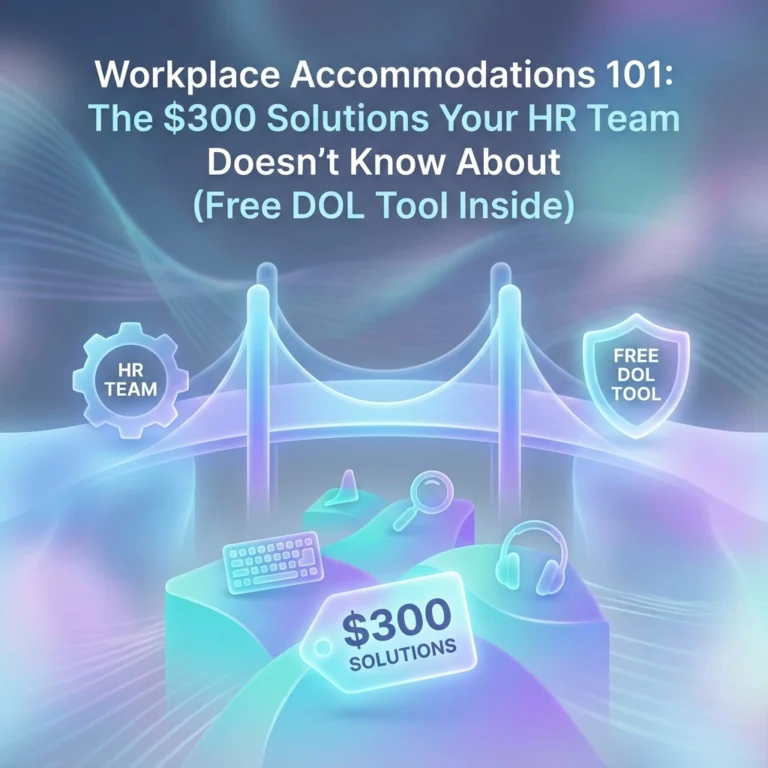
Once you have this map, you have the data you need to approach HR or your manager. You aren't going in with a complaint; you are going in with a business strategy for your own productivity. Research from the Job Accommodation Network consistently shows that most accommodations cost absolutely nothing to implement, yet the ROI in terms of employee retention and morale is astronomical.
The Forward-Looking Vision
Lent ends with a celebration of renewal and new life. Your workplace audit should aim for a similar goal. Imagine a version of your professional life where you aren't constantly fighting against your environment. Imagine a day where your energy is spent on your talents rather than on masking your disability.
This season, let your reflection be the catalyst for change. Audit the unseen, speak the unspoken, and reclaim your space in the professional world. You aren't just an employee; you are a vital part of a diverse workforce that is stronger when everyone has what they need to succeed.
If you’re looking for more ways to optimize your life and career through the lens of disability empowerment, check out our latest portfolio projects or explore our resources on navigating the workplace. Let’s turn this "desert" into a landscape where you can actually grow.