The world has shifted, and in the quest for "collaboration" and "synergy," our modern workplaces have turned into something of a sensory minefield. For many of us living with invisible disabilities, whether that’s ADHD, autism, chronic migraines, or sensory processing disorders, the trendy open-office layout isn't a playground for ideas. It’s a battleground for our attention.
We’ve all been there: you’re trying to dive deep into a complex report, but your coworker three desks down is having a heated debate about lunch, the coffee grinder is screaming in the breakroom, and the fluorescent lights are humming at a frequency that feels like it’s drilling into your skull.
The question is, why do we keep pretending this works for everyone?
The reality is that open offices were designed for a version of "normal" that ignores the diverse ways our brains actually function. While companies often pat themselves on the back for creating these "dynamic" environments, they often overlook the sensory tax paid by their neurodivergent or disabled employees. But here’s the good news: you don’t have to just "suffer through it." By utilizing specific invisible disability workplace strategies, you can navigate the chaos and start reclaiming your focus.
The Sensory Tax: Why the Open Office is Failing You
Research tells a pretty grim story about the open-office experiment. A study from Cambridge University Press found that after just eight minutes of simulated open-office noise, participants saw a 34 percent increase in stress and a 25 percent increase in negative mood. For someone with an invisible disability, these numbers aren't just statistics; they are our daily reality.
When your brain doesn't have a "filter" to tune out background noise or visual movement, you are constantly in a state of high alert. This constant hyper-vigilance leads to burnout, errors, and a total drain on your mental energy before you’ve even hit your lunch break.
It’s time we stop asking "what’s wrong with me?" and start asking "how can I change my environment?" Let’s dive into five practical invisible disability workplace strategies that will help you thrive, even when the walls (or lack thereof) feel like they’re closing in.

1. Build Your Digital Fortress: Noise-Canceling Gear is a Must
In an open office, silence is a luxury you usually have to manufacture yourself. For those dealing with sensory overload, high-quality noise-canceling headphones are not just a "nice-to-have" gadget; they are essential medical equipment.
Think of headphones as your personal "Do Not Disturb" sign. They serve two purposes:
- Physical Sound Barrier: Active Noise Cancellation (ANC) technology can specifically target the low-frequency hum of air conditioners and the mid-range chatter of a busy office.
- Social Boundary: In most office cultures, wearing large over-ear headphones is a universal signal that you are "in the zone."
If music is too distracting, try brown noise or white noise. Brown noise, specifically, is often preferred by the neurodivergent community because it has a deeper, bassier tone that feels more "grounding" than the sharp hiss of white noise. By controlling your auditory environment, you are taking the first major step toward reclaiming your focus.
2. Strategic "Real Estate": Choosing Your Desk Wisely
Not all desks are created equal. If you have the flexibility to choose where you sit, or if you’re looking for a reasonable accommodation, location is everything.
Think about a student who consistently submits assignments late, not because of procrastination, but due to chronic fatigue or the inability to concentrate in a loud classroom. In the office, your "seat" is your sanctuary.
When looking for the best spot to implement your invisible disability workplace strategies, aim for:
- The Perimeter: Sitting against a wall or in a corner reduces the "visual noise" behind you. Knowing no one can walk up behind you unexpectedly can significantly lower your baseline anxiety.
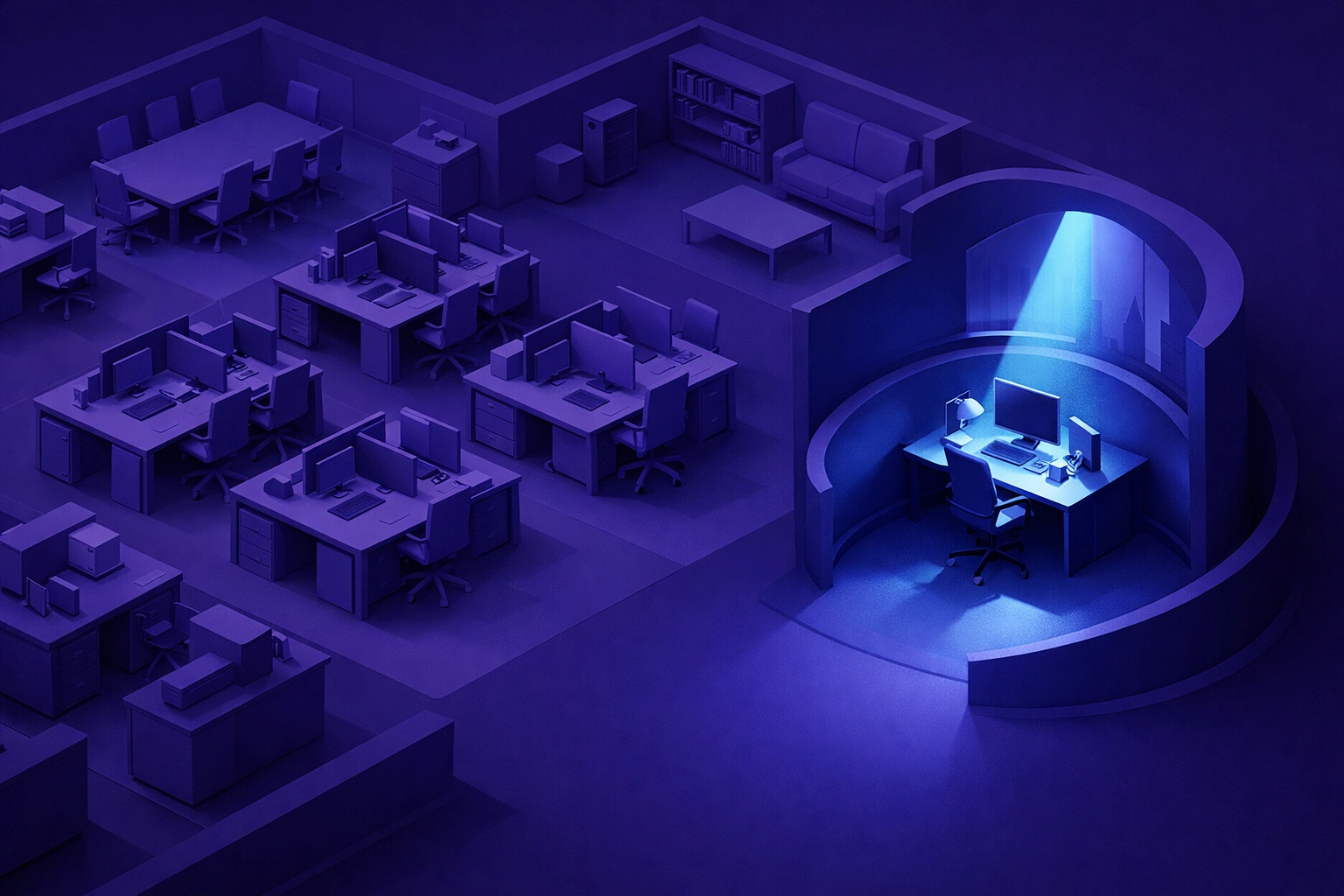
- Low-Traffic Zones: Avoid the "intersections", the desks near the coffee machine, the printer, or the main entrance. Every person walking by is a potential distraction for a brain that is wired to notice every movement.
- Natural Lighting: If fluorescent lights trigger migraines or sensory issues, try to snag a spot near a window. The natural spectrum is much easier on the eyes and helps regulate your circadian rhythm, which is vital for managing chronic conditions.
3. Implementing "Quiet Hours" and Time Blocking
Institutions often prioritize constant availability over deep work. We’ve been conditioned to think that an immediate response to a Slack message is the hallmark of a "good" employee. But for someone managing an invisible disability, constant task-switching is a recipe for disaster.
You need to create a "sanctuary in time" just as much as a sanctuary in space. One of the most effective invisible disability workplace strategies is to schedule "Quiet Hours."
- Block it out: Put a recurring event on your calendar titled "Deep Work" or "Focus Time."
- Communicate the "Why": You don’t have to disclose your entire medical history to say, "I’m most productive when I have two hours of uninterrupted time in the morning. I’ll be offline from 9 AM to 11 AM to tackle the big projects."
- Use Tools: Lean on Dr. Disruptor's advocacy resources to help frame these requests. Using apps that block distracting websites during these hours can also provide the extra "scaffolding" your brain might need.
4. Visual Boundaries: The "Low-Tech" Lifeline
In an open office, we are often victims of "peripheral distraction." Every time a coworker stands up, stretches, or tosses a ball, your brain registers it. While you might not be able to build a floor-to-ceiling wall, you can create visual boundaries.
Consider these "low-tech" solutions:
- Desk Dividers: Some offices provide clip-on acoustic panels. These can dampen sound and, more importantly, block your view of the rest of the floor.
- Monitor Placement: Angle your monitors to create a small "cockpit" effect. This limits your field of vision to just the work in front of you.
- Plants: A tall snake plant or a small leafy shrub on your desk isn't just for aesthetics. It acts as a soft visual buffer that can make your workspace feel more private and less like a fishbowl.

5. The Power of Self-Advocacy: Turning "Preferences" into "Accommodations"
The most important of all invisible disability workplace strategies isn't a gadget or a desk location, it’s your voice.
Too often, we treat our needs as "annoyances" we are causing others. We think, "I should just be able to handle the noise like everyone else." But here’s the truth: you aren't "everyone else." Your brain processes the world differently, and that’s okay.
When you frame your needs as accommodations rather than preferences, the conversation changes. Under the Americans with Disabilities Act (ADA), you have a right to reasonable accommodations that allow you to perform your job.
- Be Specific: Instead of saying "the office is too loud," try "I need to work from a quiet breakout room for two hours a day to meet my deadlines."
- Focus on Output: Explain how these changes will help the company. "When I have a dedicated quiet space, my error rate drops and I can complete tasks 20% faster."
- Redirect to Resources: If you’re unsure how to start this conversation with HR, check out the Hidden Disabilities section of our site for guides on advocacy.
Reclaiming Your Focus: A Forward-Looking Vision
Is the open office "bad"? For many of us, the answer is a resounding "yes." But we don’t have to be victims of a floor plan. By taking control of our sensory input, setting firm boundaries with our time, and advocating for our right to a functional workspace, we can turn a chaotic environment into one where we can actually excel.
The goal isn't just to "survive" the workday. The goal is to thrive. We want to get to the end of the day with enough energy left over to actually enjoy our lives, rather than collapsing from sensory exhaustion.
As we move forward, we must continue to challenge institutions to move beyond "trendy" designs and toward truly inclusive environments. Until then, use these invisible disability workplace strategies as your personal toolkit for success. You deserve a workspace that works for you, not against you.
Are you ready to take back your workday? Start by choosing one strategy from this list and implementing it tomorrow. Whether it's putting on those headphones or moving your desk, your focus is worth fighting for.
Explore more tips on empowerment and advocacy at Dr. Disruptor and join a community that understands that "invisible" doesn't mean "imaginary." Let’s disrupt the status quo together.