The world has shifted. In January 2026, as students returned to campus for spring semester, they walked into an accommodation landscape that's actively being rewritten. Legislative efforts, digital mandates, and uncomfortable conversations about diagnosis integrity are converging at exactly the right moment: because the system we've been using isn't working for the students who need it most.
Welcome to Campus Conversations, where we're diving into the messy, urgent reality of supporting students with invisible disabilities in higher education. This isn't about compliance checkboxes or "diversity statements" buried on university websites. This is about the 15-20% of college students navigating ADHD, chronic illness, anxiety, and other conditions that don't announce themselves with a wheelchair or white cane: and the institutional barriers that still force them to choose between disclosure and survival.
The RISE Act: Cutting Through the Red Tape
Just this past January, Congress reintroduced the RISE Act (Respond, Innovate, Succeed and Empower). The name is aspirational, but the need is concrete. If passed, this bipartisan bill would require colleges to accept existing documentation from high school: IEPs, 504 Plans, doctor's notes, psychological evaluations: without forcing students to re-prove their invisible disability all over again.
Why does this matter? Because right now, the transition from high school to college creates a documentation cliff. A student who had accommodations throughout high school suddenly finds themselves starting from scratch, navigating unfamiliar systems, and often paying out-of-pocket for updated evaluations that can cost hundreds or even thousands of dollars.
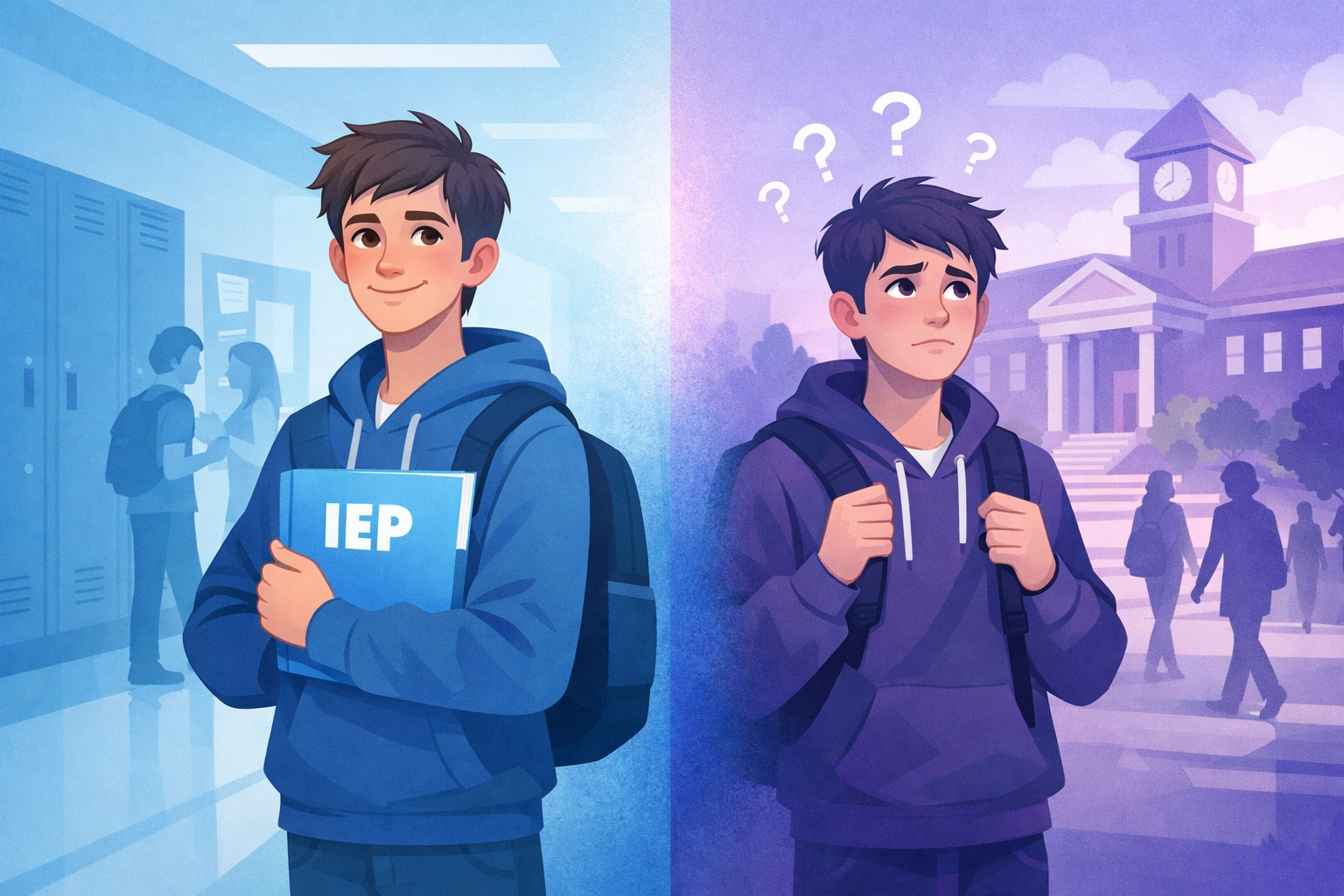
The RISE Act addresses what accessibility advocates have been shouting for years: the burden of proof shouldn't rest entirely on the student. The documentation already exists. The disability didn't disappear the moment they received their acceptance letter. Yet the current system treats college entry like a reset button, forcing students to re-litigate their own existence before they can even access basic accommodations like extended test time or note-taking assistance.
The Self-Reporting Gap: When Stigma Becomes a Barrier
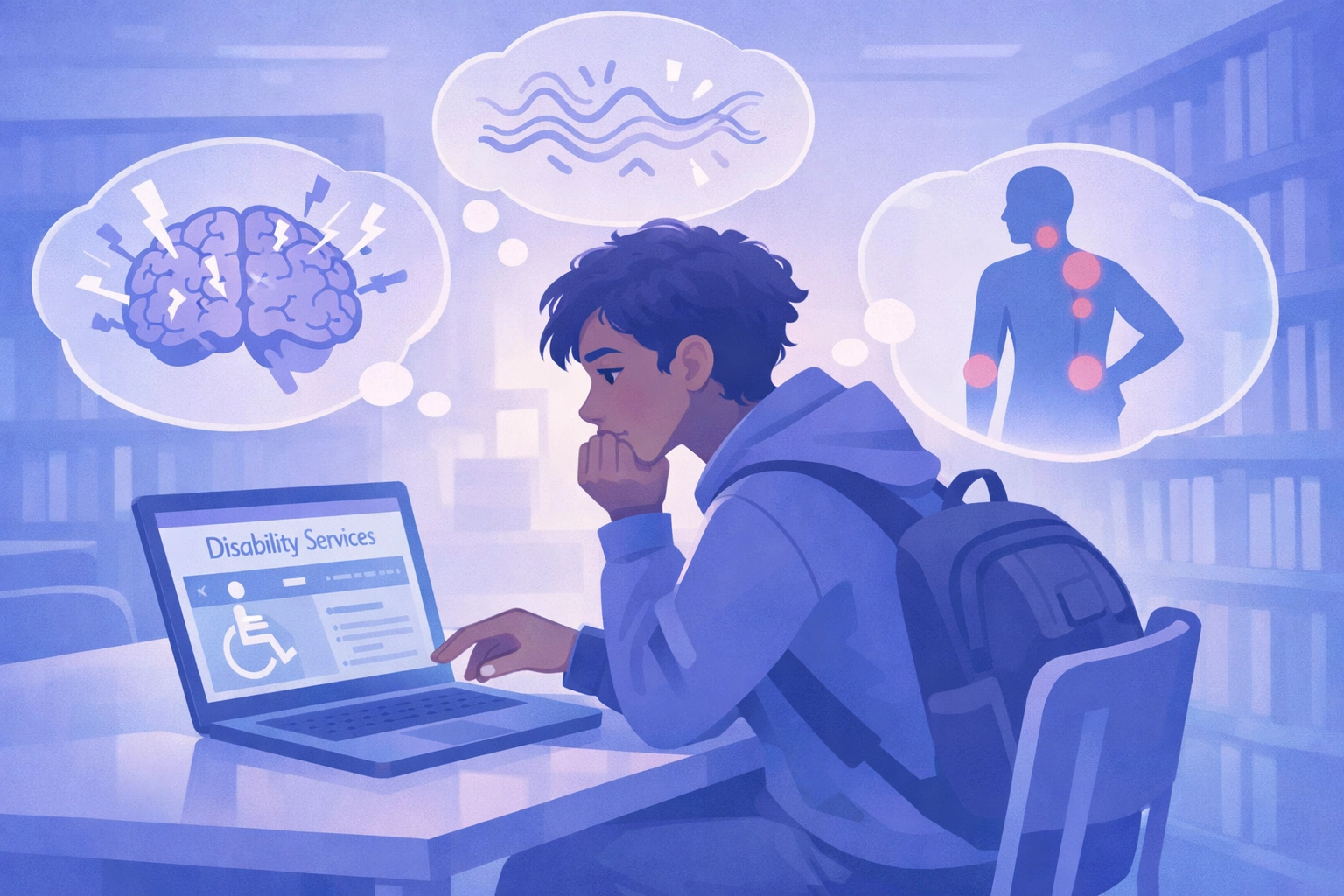
Here's the uncomfortable truth that reports from 2024 and 2025 keep confirming: a substantial number of students with invisible disabilities never self-identify. They don't reach out to Disability Services Offices. They don't request accommodations. They suffer in silence.
The reasons are deeply human. Stigma. Fear of judgment. The exhausting desire to "pass as normal" in an environment that already feels overwhelming. For many students, the decision to disclose an invisible disability isn't just logistical: it's existential. It means admitting vulnerability in spaces that reward appearing "put together." It means risking the label of being "less capable" or "high maintenance."
This creates what experts call a critical support gap. Students who could thrive with accommodations are instead white-knuckling their way through semesters, experiencing preventable burnout, failing classes they could pass, and sometimes dropping out entirely. The accommodations exist. The legal framework exists. But the psychological safety required for students to actually access those resources? That's still missing on too many campuses.
Colleges must move beyond compliance. It's not enough to have a Disability Services Office tucked away in a basement with limited hours. Institutions need to actively combat disability stigma through faculty training, normalize accommodations in syllabi, and create multiple welcoming pathways for students to seek support. When professors announce on day one that accommodations are available and encouraged: not as a "special favor" but as a standard part of education: students notice. Culture shifts.
The Integrity Question: Self-Report vs. Objective Evidence
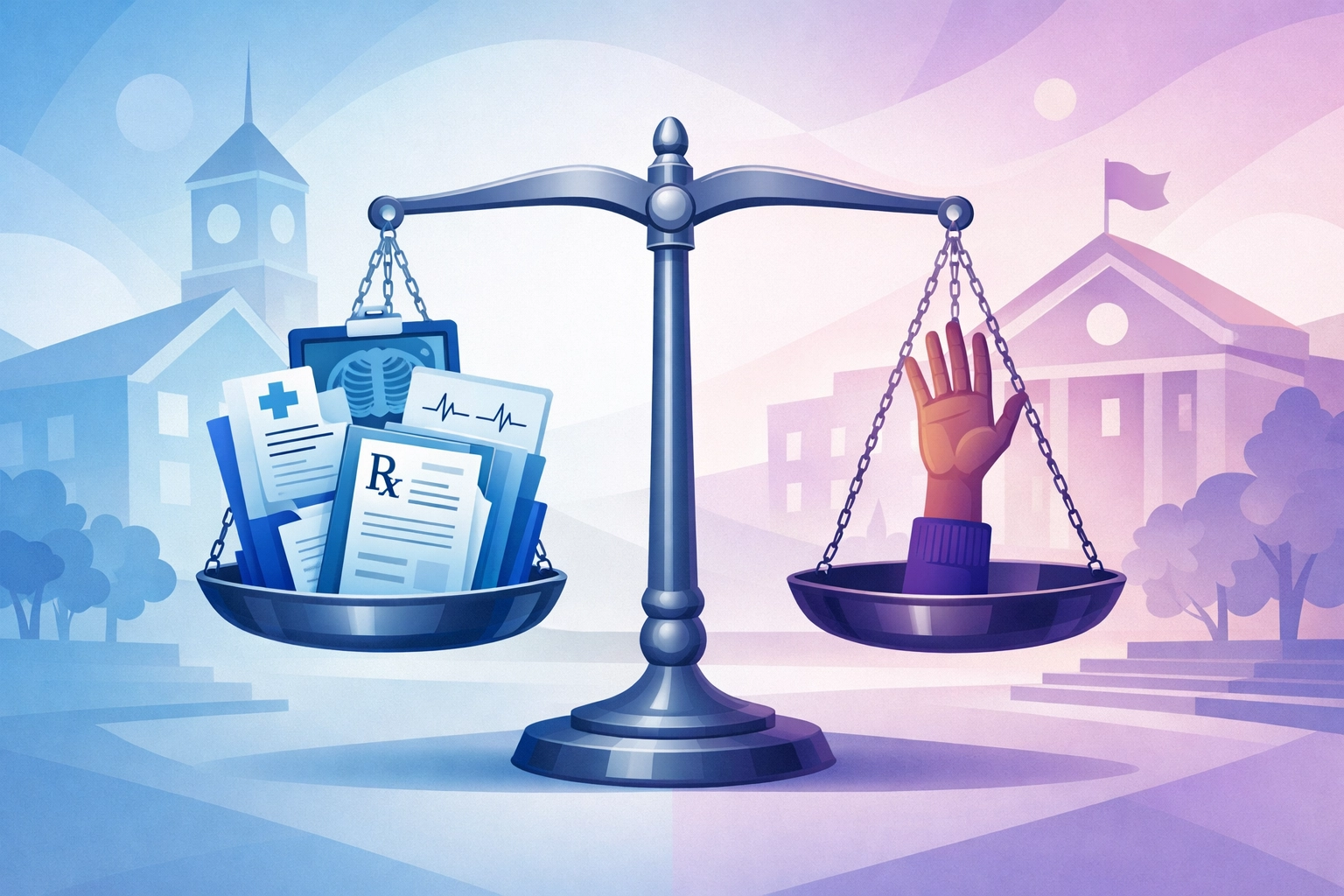
Now we enter more complicated territory. An October 2025 report revealed that many Disability Services Offices increasingly rely on student self-reports and professional recommendations rather than strictly objective evidence of functional impairment. The intention is supportive: reducing barriers, trusting students, honoring their lived experience.
But this approach has sparked legitimate debate. A February 2026 report raised concerns about what some term "dubious diagnoses" for conditions like ADHD and anxiety, obtained seemingly to gain accommodations like extended test time. Education experts have pushed back, worried about both equity (are accommodations being distributed fairly?) and integrity (is the system being gamed?).
This is the double-edged sword of self-reporting. On one hand, requiring exhaustive documentation creates prohibitive barriers for students who genuinely need support but can't afford expensive evaluations. On the other hand, accommodations only work when they're directed toward students with legitimate functional limitations: not students who simply want a competitive advantage.
The answer isn't to swing back to rigid gatekeeping that locks out vulnerable students. It's to develop more nuanced assessment practices within DSOs. This might include:
- Functional impact interviews that go beyond diagnosis labels to understand how a condition actually affects learning
- Trial accommodation periods that assess whether supports genuinely improve a student's ability to demonstrate their knowledge
- Collaboration between DSOs and academic departments to identify patterns and ensure consistency
- Clear communication about what accommodations address (removing barriers) versus what they don't (creating unfair advantages)
The goal isn't to be suspicious of students. It's to build a system trustworthy enough that when someone receives accommodations, everyone: including the student: knows they're addressing a real need.
Digital Accessibility: The Infrastructure No One Sees
While debates about self-reporting dominate campus conversations, there's another revolution happening in the background: digital accessibility mandates. In April 2024, the U.S. Department of Justice issued final regulations under Title II of the ADA, requiring public colleges and universities to ensure their websites, mobile applications, and digital content meet Web Content Accessibility Guidelines (WCAG) 2.1 Level AA standards.
The timeline is tight. Large public institutions have until April 2026: essentially now. Smaller institutions have until April 2027. This isn't optional. This isn't aspirational. This is enforceable law.
For students with invisible disabilities, this matters enormously. A student with ADHD navigating a cluttered, poorly organized course management system experiences genuine cognitive barriers. A student with visual processing issues trying to read low-contrast text on a university portal isn't being "difficult": they're encountering an accessibility failure. Digital environments can be just as exclusionary as physical ones, they're just harder to see.
Compliance with WCAG standards means clearer navigation, better color contrast, keyboard accessibility, screen reader compatibility, and thoughtful content structure. It means recognizing that digital ramps matter just as much as physical ones. When colleges invest in accessible digital infrastructure, every student benefits: including those who haven't disclosed disabilities but quietly struggle with standard interfaces.
Regional Innovations: The Massachusetts Model
Beyond federal mandates, states are also pushing forward. In April 2025, Massachusetts approved regulations for the Massachusetts Inclusive Postsecondary Education Initiative (MAIPSE). This initiative specifically enhances opportunities for students with severe disabilities, including intellectual and developmental disabilities, by outlining expectations for participation plans and reporting requirements.
MAIPSE represents a different approach: recognizing that some students need more than traditional accommodations. They need structured pathways, supported education models, and institutional commitment that goes beyond "reasonable accommodation" language. It's a reminder that the accommodation landscape isn't one-size-fits-all, and that innovation often happens at state and regional levels before scaling nationally.
Moving Beyond Compliance Culture
Here's the bottom line: the past year has brought significant progress. The RISE Act pushes against documentation barriers. Digital accessibility mandates create enforceable standards. Regional initiatives like MAIPSE expand what's possible. These are real, meaningful changes.
But progress on paper doesn't automatically translate to progress in student experience. The persistent challenges around stigma, self-reporting hesitancy, and the delicate balance of accommodation integrity remind us that legislative wins are just the foundation. The real work happens in Disability Services Offices, faculty meetings, and individual student interactions.
Success hinges on colleges fostering cultures where:
- Students feel psychologically safe to disclose without fear of judgment or career consequences
- Faculty understand that accommodations level the playing field rather than create unfair advantages
- DSOs have resources to conduct thoughtful assessments that balance accessibility with integrity
- Digital infrastructure is built with universal design principles from the start, not retrofitted later
- Campus leadership publicly champions disability inclusion rather than treating it as a compliance obligation
The accommodation landscape is changing. Students with invisible disabilities are navigating a system that's slowly becoming more responsive, more accessible, and more understanding. But "slowly" isn't good enough when we're talking about students' ability to access education and build futures.
The question isn't whether colleges are doing "enough" to meet legal minimums. The question is whether they're building environments where every student: regardless of visible or invisible differences: can genuinely thrive. That's the conversation we need to keep having, semester after semester, until the answer is an unqualified yes.
Stay connected with Dr. Disruptor as we continue tracking developments in disability advocacy and empowerment. Visit drdisruptors.com to join the conversation.