Introduction
In today’s corporate landscape, everyone wants to be a “Thought Leader.” It’s a shiny, aspirational title that promises influence, expertise, and a direct line to… well, thoughts. But what does it really mean? And are we actually achieving it, or just generating more corporate noise?
Our latest cartoon from the Concordia Glossary perfectly captures the two sides of “Thought Leadership”:

We see the official meaning: “Influential ideas or insights from an expert in a field.” This is the ideal—someone genuinely breaking new ground, offering valuable perspectives that shape discussions and drive progress. It’s about profound understanding, research, and truly original contributions.
But then there’s the satirical meaning: “Whatever the CEO posted on LinkUp this morning that is so vague it can’t be challenged.” Ouch. This hits close to home for many of us, doesn’t it? The endless stream of generic, buzzword-laden posts that offer little substance but are lauded simply because of the sender’s title. It’s the kind of “thought” that’s designed to be unchallengeable because it doesn’t actually say anything concrete.
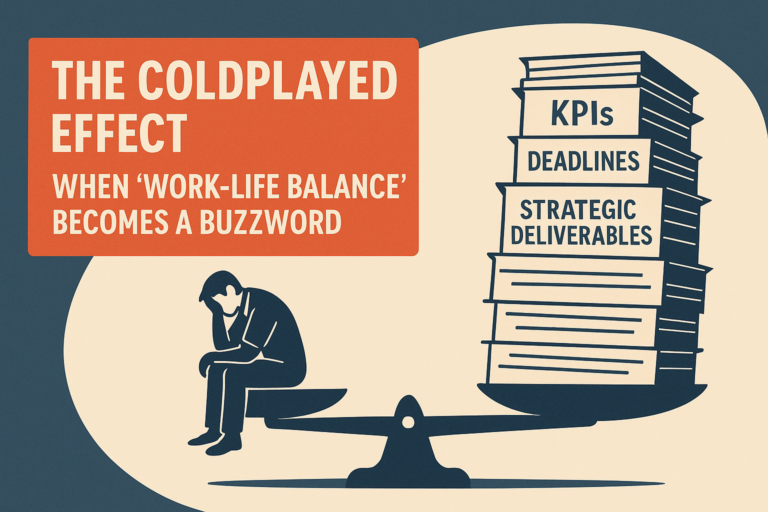
The Coldplayed Effect highlights this stark contrast with humor, but the underlying truth is serious. In an age of information overload, genuine thought leadership is more valuable than ever. It cuts through the noise and provides real direction.
So, how do we move from “LinkUp” vague-posting to genuine influence?
- Be Specific: Vague statements lead to vague outcomes. If you have an idea, articulate it clearly and provide supporting evidence or examples.
- Challenge (Respectfully): True thought leadership encourages dialogue and constructive debate, not just agreement. Create an environment where ideas can be scrutinized and refined.
- Offer Solutions, Not Just Observations: It’s easy to point out problems. A thought leader offers new ways of thinking that lead to solutions.
- Engage Authentically: Don’t just broadcast. Respond to comments, ask questions, and be open to different perspectives.
- Prioritize Substance Over Self-Promotion: The goal isn’t to be seen as a thought leader, but to be one by providing value. The recognition will follow.
The next time you see a “Thought Leadership” post, or consider crafting one yourself, ask: Is this genuinely influential, or is it just another entry in the corporate echo chamber? Let’s strive for less “LinkUp” and more real impact.