Let's get real for a second: workplace accommodations shouldn't be this hard.
Yet here we are. Employees with invisible disabilities: chronic pain, ADHD, anxiety, autoimmune conditions: are still fighting battles that shouldn't exist in 2026. And employers? Many are unknowingly sabotaging their own teams, opening themselves up to lawsuits, and losing talented people because of avoidable mistakes.
Here's the thing that blows people's minds: 58% of workplace accommodations cost absolutely nothing. Zero dollars. We're talking about flexible schedules, quiet workspaces, written instructions instead of verbal ones. The barriers aren't financial: they're about awareness, communication, and follow-through.
Whether you're an employee trying to advocate for yourself or an employer wanting to get this right, these seven mistakes are derailing workplace accommodation success. Let's fix them.
Mistake #1: Treating the Interactive Process Like a One-Way Street
The interactive process is supposed to be exactly what it sounds like: a conversation. But too often, it becomes a monologue where HR or management decides what they think the employee needs without actually asking.
Picture this: an employee with ADHD requests accommodations. The manager, thinking they're being helpful, immediately offers noise-canceling headphones. Sounds reasonable, right? Except the employee actually needed flexible deadlines and the option to work from home during high-focus tasks. The headphones sit in a drawer, and nothing changes.
The fix:
- Sit down with the employee and listen first
- Ask open-ended questions: "What would help you do your best work?"
- Brainstorm solutions together: don't assume you already have the answer
- Consult resources like the Job Accommodation Network for creative ideas you might not have considered
The interactive process works when it's truly interactive. Shocking concept, I know.
Mistake #2: Missing Accommodation Requests Because They Don't "Sound Official"
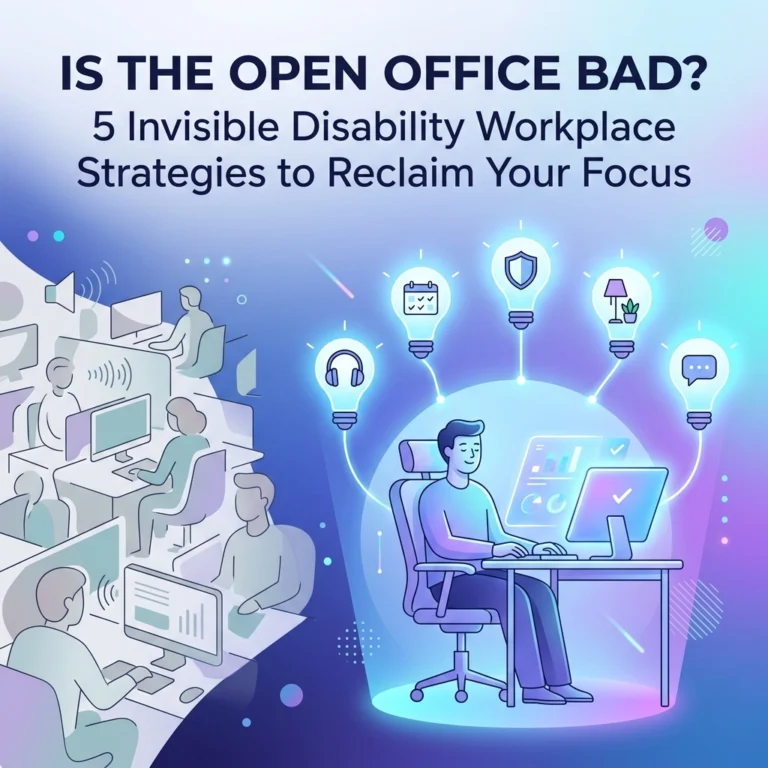
Here's a scenario that plays out constantly: an employee tells their supervisor, "I've been really struggling to focus in the open office: my anxiety has been through the roof." The supervisor nods sympathetically, says "hang in there," and moves on with their day.
That was an accommodation request. It didn't use legal language. It didn't come through the official HR portal. But it was still a request: and ignoring it can constitute a violation of the employee's rights.

The fix:
- Train all supervisors and managers to recognize accommodation requests, even informal ones
- Create a clear, accessible accommodation policy and make sure everyone knows it exists
- Establish a simple process: when in doubt, loop in HR
- Never assume an employee needs to say the magic words "reasonable accommodation" for their request to count
Invisible disabilities don't always come with visible requests. Your team needs to be listening.
Mistake #3: Letting Requests Sit in Limbo
Time matters. When an employee finally works up the courage to request an accommodation: especially for an invisible disability they've likely been masking for months or years: getting radio silence in response is devastating.
The ADA doesn't set a specific deadline for responding to accommodation requests. But "as soon as possible" is the expectation, and unnecessary delays can absolutely result in discrimination claims.
The fix:
- Acknowledge requests immediately, even if you need time to figure out the solution
- Set internal timelines: aim to begin the interactive process within 5-7 business days
- Communicate clearly about next steps so the employee isn't left wondering
- If you need medical documentation, request it promptly: don't let the process stall
Delays send a message, even when you don't intend them to. Make sure the message you're sending is: "We take this seriously."
Mistake #4: Making Assumptions About What Someone "Really" Needs
This one hits hard for people with invisible disabilities. Because their conditions aren't immediately visible, they're often met with skepticism, assumptions, or well-meaning but completely off-base "solutions."
Maybe it's assuming that someone with chronic fatigue just needs more coffee breaks. Or thinking that an employee with depression will be fine if they just "take a mental health day" once in a while. These assumptions: however well-intentioned: miss the mark because they're not based on actual communication.
The fix:
- Rely on medical documentation and direct conversation, not guesswork
- Ask the employee what they specifically need: not what you think they need
- Recognize that the same diagnosis can look completely different in different people
- Check your biases at the door
Your job isn't to diagnose or prescribe. It's to collaborate.
Mistake #5: Documentation? What Documentation?
If it's not written down, it didn't happen. At least, that's how it'll look if an accommodation dispute ever ends up in court.
Too many organizations handle accommodations through casual conversations, verbal agreements, and mental notes. Then, when something goes wrong: when the employee claims they weren't accommodated, or when management forgets what was agreed upon: there's no paper trail.

The fix:
- Document every step of the accommodation process: the request, the interactive discussions, the options considered, and the final decision
- If a request is denied, document the specific reasons why
- Keep records confidential and stored appropriately
- Use a consistent system so nothing falls through the cracks
"No documentation means no defense" isn't just a saying: it's reality.
Mistake #6: Treating Medical Information Like Office Gossip
Confidentiality isn't optional. When an employee shares medical information to request an accommodation, that information is protected. Full stop.
Yet it happens all the time: a manager casually mentions to a colleague that someone has anxiety. An HR rep discusses an employee's chronic condition in a shared office space. Suddenly, the employee's private health information is making the rounds: and so is their distrust in the organization.
The fix:
- Only share accommodation details with people who absolutely need to know
- Managers typically only need to know what the accommodation is and that it's approved: not the underlying medical condition
- Store medical documentation separately from general personnel files
- Train everyone involved in the accommodation process on confidentiality requirements
Trust is fragile. Once it's broken, it's incredibly hard to rebuild.
Mistake #7: Setting It and Forgetting It
Congratulations: you implemented an accommodation! The employee has their flexible schedule, their ergonomic setup, their modified duties. Time to check that box and move on, right?
Not so fast.
Disabilities evolve. Job duties change. What worked six months ago might not be working now. And if you're not checking in, you won't know until there's a problem.

The fix:
- Schedule regular check-ins to ensure the accommodation is still effective
- Create an open-door policy so employees feel comfortable raising concerns
- Be proactive about reviewing accommodations when job duties or team structures change
- Treat accommodations as living arrangements, not one-time fixes
The goal isn't just compliance: it's creating an environment where people can actually thrive.
The Bigger Picture: Accommodations Are About People
Here's what gets lost in all the policy talk and legal jargon: workplace accommodations are fundamentally about people. Real humans trying to do their jobs, support their families, and contribute their talents: while navigating challenges that most of their colleagues never have to think about.
When organizations get accommodations right, the impact is transformational. Employees feel valued. Retention improves. Productivity goes up. And the culture shifts toward genuine inclusion rather than performative checkboxes.
When they get it wrong? They lose good people. They face legal consequences. And they send a clear message that disability inclusion isn't actually a priority.
For more foundational guidance, check out our deep dive on understanding reasonable accommodations in the workplace.
The path forward isn't complicated. Listen. Communicate. Document. Follow through. And remember that behind every accommodation request is a person who just wants the chance to succeed.
That's not too much to ask.