The world has shifted. For years, the corporate machine has hummed along on a one-size-fits-all frequency, leaving those of us with different operating systems to either keep up or fade out. But here is the hard truth: for the neurodivergent professional, the standard advice of "just take a weekend off" is like putting a band-aid on a broken dam. We aren't just tired; we are experiencing a systemic depletion of our very essence.
If you’ve found yourself staring at a flickering cursor for three hours, or if the mere thought of another Zoom call makes you want to crawl under your desk and stay there until 2029, you aren’t "lazy." You are likely in the middle of a neurodivergent burnout, and standard productivity hacks won't save you. You need a specialized neurodivergent survival strategy that prioritizes sustainable energy management over traditional "grind culture."
The Invisible Weight: Why Burnout Hits Us Differently
For a neurotypical person, burnout is often a result of too much work. For the neurodivergent professional, burnout is the result of too much performing. We spend our days "masking", hiding our stims, forcing eye contact, translating our thoughts into "corporate speak," and filtering out the hum of the air conditioner that feels like a chainsaw to our ears.
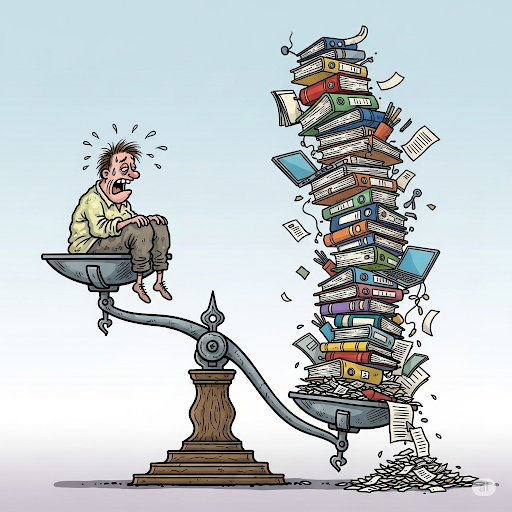
This masking is a double-edged sword. It helps us "fit in" and secure the bag, but it also acts as a silent tax on our cognitive load. Imagine trying to run a high-end software program on a laptop while fifteen other background apps are draining the battery. Eventually, the system crashes. That crash is what we call burnout.

To break the burnout cycle, we have to recognize that our exhaustion isn't a character flaw; it’s a biological signal. We are often forced to embrace our authentic self in a world that rewards conformity. When we ignore our need for sensory rest and cognitive flexibility, we aren't just working hard, we are survival-moding our way through life.
The Survival Checklist: Identifying Your Triggers
The first step in neurodivergent survival is knowing what actually drains your battery. It’s rarely just the "work." It’s the environment. Ask yourself:
- Is it Sensory? Are the fluorescent lights, the open-office chatter, or even the texture of your professional clothes wearing you down?
- Is it Social? Are you spending 80% of your energy navigating office politics and "unspoken rules" rather than doing your job?
- Is it Executive? Is the lack of clear structure making your brain spin in circles, or is a rigid, micro-managed schedule stifling your flow?
When these triggers pile up, we lose our ability to regulate. We find ourselves struggling with emotional regulation, becoming more irritable, or conversely, becoming completely numb to our surroundings. The question is, how can we navigate these triggers without losing our careers?
Tactical Survival: Sustainable Energy Management
If we want to maintain sustainable energy management, we have to stop treating our energy like an infinite resource and start treating it like a high-stakes budget. You wouldn't spend your last $100 on a designer keychain, so why spend your last bit of "people energy" on a pointless networking mixer?
- The Energy Pacing Method: Stop looking at your to-do list as a series of tasks and start looking at them as energy withdrawals. High-energy tasks (like client presentations) must be followed by low-energy "recovery" blocks (like data entry or administrative work in a dark room).
- Sensory Detox: Schedule "blackout periods" where you turn off all notifications, dim the lights, and wear noise-canceling headphones. This isn't a luxury; it’s maintenance.
- Outsource the Friction: If your brain hits a wall with organization, use the right tools. We highly recommend checking out our Toolsurf referral links for productivity apps that handle the heavy lifting of scheduling and task management so you don't have to. Using a CozyLa calendar or similar visual aids can be a literal lifesaver for executive dysfunction.

Breaking the Burnout Cycle: The Power of Unmasking
We often hear that we should "bring our whole selves to work," but we know that can be a trap. However, radical unmasking in safe spaces is essential for recovery. If you are always "on," you are always burning fuel.
Finding ways to harness the power of your unique brain starts with accepting that you don't have to do things the "normal" way to be successful. If you work better in 20-minute bursts at 2 AM, and your job allows for it, do it. If you need to stim during a meeting to stay focused, keep a fidget toy under the desk.
Many professionals deal with invisible disabilities that the corporate world simply isn't built for. By acknowledging these needs, you stop fighting against your own biology and start working with it. This shift is the cornerstone of neurodivergent survival.
Deep Recovery: Moving Beyond "Self-Care"
Bubble baths and scented candles are great, but they won't fix a nervous system that has been fried by years of forced conformity. For the neurodivergent professional, deep recovery often requires more specialized intervention.
- Trauma-Informed Therapy: Modalities like EMDR (Eye Movement Desensitization and Reprocessing) or Brainspotting are incredibly effective for neurodivergent folks because they focus on the nervous system rather than just "talking through" problems.
- Planned Pleasure: Burnout makes us forget what we actually enjoy. Reclaiming your "special interests" can be a powerful way to refill your cup. If you love coding for fun, or deep-diving into 19th-century history, do it without guilt.
- Radical Boundaries: Learn to say "no" to the "non-essential." If an "optional" happy hour is going to cost you three days of productivity due to social exhaustion, it’s not really optional: it’s a threat to your stability.

Challenging the Institution: It’s Not Just You
It is easy to blame yourself for "not being resilient enough." But let’s call it like it is: many organizations like to pat themselves on the back for "diversity and inclusion" while offering zero actual support for neurodivergent employees. They want the "superpowers" (the hyper-focus, the creative problem-solving, the pattern recognition) without providing the environment those powers need to thrive.
We must advocate for workplaces that recognize that design is not how things look, but how they work. A workplace that works for a neurodivergent person is a workplace that works better for everyone. Flexible hours, clear written communication, and sensory-friendly environments aren't "special favors": they are the foundations of a modern, efficient workforce.
The Path Forward: Choosing Your Own Rhythm
The journey toward sustainable energy management isn't a straight line. You will have days where the world feels too loud and your brain feels too slow. That’s okay. The goal isn't to become a neurotypical "productivity machine"; the goal is to build a life where you can thrive as your authentic self.

Remember:
- Your worth is not tied to your output during a crisis.
- Rest is a productive activity.
- You are the expert on your own brain.
If you are looking for more ways to optimize your workflow and protect your peace, explore our blog for more insights on disability advocacy and empowerment. We are here to disrupt the status quo, one neurodivergent career at a time.
Breaking the burnout cycle requires courage. It requires the courage to stop pretending and the courage to demand a seat at the table on your own terms. You’ve spent long enough trying to fit into a mold that wasn't made for you. It’s time to break the mold and build something better.
Check out our Toolsurf referral links for the latest tools designed to help you stay organized without the overwhelm, and let's start prioritizing your neurodivergent survival today. The world needs your unique perspective; but it needs you healthy, whole, and unburnt.