The world has shifted. We are no longer living in an era where the "standard" office setup works for everyone, or even most people. For years, the conversation around workplace accommodations has been shrouded in a fog of perceived high costs, legal fears, and the mistaken belief that we’re giving someone "special treatment."
Let’s be real: the traditional office was built for a very specific type of person. But the talent pool? It’s diverse, neurodivergent, and physically varied. If you aren't adapting, you aren't just being "old school", you’re actively losing money and talent.
At Dr. Disruptor, we believe in flipping the script. Accommodations aren’t a burden; they are a competitive advantage. They aren’t about "help"; they are about equal access. When we remove the friction between a human being and their work, productivity doesn't just increase, it explodes.
The Myth of the "Expensive" Accommodation
One of the biggest hurdles I see when talking to business owners is the "Budget Boogeyman." Employers hear the word "accommodation" and immediately visualize a $50,000 office renovation or a specialized piece of machinery that costs more than a mid-sized sedan.
The reality? It’s actually quite boring, and very affordable.
According to the Job Accommodation Network (JAN), 58% of all workplace accommodations cost exactly zero dollars. That’s right. Zero. Zilch. Nada. For the remaining 42%, the average one-time cost is about $500.
Think about that for a second. In an age where companies spend thousands on "culture" (aka ping-pong tables and free kombucha), the average cost to keep a high-performing employee with a disability in their role is essentially the cost of a decent office chair.
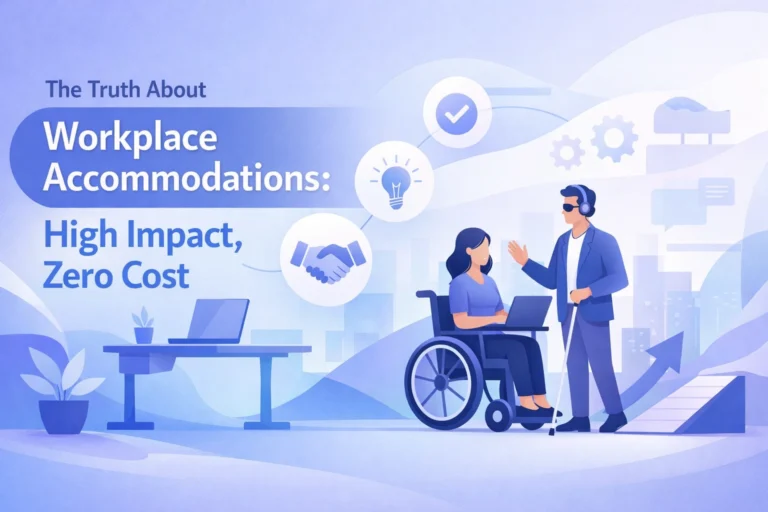
When we talk about high impact, zero cost solutions, we aren't just talking about saving pennies. We’re talking about building a culture where everyone can show up as their best selves. Check out our invisible not forgotten post to see how these subtle shifts change lives.

It’s Not Special Treatment; It’s Equal Access
We need to kill the phrase "special treatment." It implies that someone is getting an unfair advantage.
Imagine two people trying to see over a fence. One is six feet tall; the other is five feet tall. If you give the five-foot-tall person a one-foot box to stand on, are they getting "special treatment"? No. They are getting equal access to the view.
In the workplace, that "box" might be a flexible start time for someone with chronic fatigue, or written instructions for someone who processes information differently. These are lifelines that allow talented people to do the jobs they were hired to do.
The High-Impact, Zero-Cost Playbook
If you want to start making your team more accessible today without touching your bank account, here are the heavy hitters:
- Flexible Scheduling: This is the king of zero-cost hacks. Allowing an employee to start at 10 AM instead of 8 AM because they have morning medication side effects or mobility challenges costs nothing, but it ensures they aren't burnt out by noon.
- Written Over Verbal: For many neurodivergent employees, or those with hearing impairments, a quick "Hey, can you do X, Y, and Z?" in the hallway is a recipe for disaster. Moving to a culture of "If it’s not in an email or a Slack message, it didn't happen" provides a permanent reference point and reduces anxiety for everyone.
- Quiet Zones and Noise-Canceling Headphones: Open-plan offices are a nightmare for people with ADHD, sensory processing disorders, or anxiety. Simply designating one area as a "No-Talk Zone" or allowing employees to wear their own noise-canceling headphones is a massive productivity booster.
- Task Reallocation: Sometimes, a job description includes "occasional heavy lifting" or "making phone calls," but those aren't core to the role. Swapping those minor tasks with a teammate who prefers them (and perhaps hates the spreadsheets the other person loves) is a win-win that costs zero dollars.
Finding the Right Tools on a Budget
Sometimes, you do need a tool, but you don't need to break the bank. We often recommend checking out resources like Toolsurf or the Friends Savings Network. These platforms are goldmines for finding low-cost assistive technologies, from specialized software to ergonomic gadgets, that fit within that $500 average.
For instance, simple screen readers or speech-to-text tools are often built into the operating systems we already use (Windows and macOS), but most people don't know they exist. Empowering your team to explore these "built-in" hacks is a great first step.

The HR/Employer Accessibility Checklist
If you’re an HR professional or a business owner, use this checklist to audit your current environment. How many of these can you check off right now?
- [ ] The "Ask" Culture: Do employees know who to talk to about accommodations without feeling like they are "causing trouble"?
- [ ] The Interview Audit: Are your job postings clear about essential functions vs. "nice-to-haves"? Do you offer accommodations for the interview process itself?
- [ ] Physical Environment: Are your common areas (breakrooms, restrooms) truly accessible? (Check out our Cozyla Calendar 2 unboxing for ideas on how digital tools can help with organization and visibility in common spaces).
- [ ] Meeting Norms: Do your meetings always have an agenda sent 24 hours in advance? Do you allow people to keep their cameras off if they have sensory overload?
- [ ] Tech Stack: Have you reviewed the accessibility features of your current software (Slack, Zoom, Microsoft 365)?
A Template for Employees: How to Ask
Sometimes the hardest part for an employee is knowing how to phrase the request. If you’re an employee looking for equal access, feel free to use this template:
Subject: Request for Workplace Adjustment – [Your Name]
Hi [Manager's Name],
I’m writing to discuss a small adjustment to my current workflow that would help me be even more productive in my role.
To ensure I can perform at my highest level, I would like to [insert request: e.g., shift my start time to 9:30 AM / receive all project instructions in writing / use noise-canceling headphones during deep-work blocks].
This adjustment will help me [insert benefit: e.g., manage my energy more effectively / ensure no details are missed / maintain focus in our open office environment].
I’ve researched some options and believe this is a high impact, zero cost shift that will help me contribute more effectively to the team. I’d love to chat briefly about how we can implement this.
Best,
[Your Name]

The Bottom Line: Why You Should Care
Why go through the effort? Because the alternative is stagnation.
When you prioritize accessibility, you aren't just helping one person. You are practicing Universal Design. When you add captions to a video for a deaf employee, you’re also helping the person who forgot their headphones at the airport. When you create flexible schedules for a person with a chronic illness, you’re also helping the parent who needs to drop their kid off at school.
Accessibility makes everything better for everyone.
At Dr. Disruptor, we don't just talk about these changes: we help you implement them. Whether you're a business looking to overhaul your DEI strategy or an individual looking for empowerment, we’re here to help you navigate the landscape of disability advocacy.
Ready to Level Up Your Team?
If you want to move beyond the basics and build a truly inclusive, high-performance culture, let’s talk. We offer expert strategy sessions and coaching specifically designed to bridge the gap between "standard" and "accessible."
Don't wait for a legal requirement to force your hand. Be a leader. Be a disruptor.
Book an Expert Strategy Session with Dr. Disruptor today!

Final Thoughts
The "future of work" is a phrase that gets tossed around a lot. But the future of work isn't about AI or VR: it's about humanity. It’s about recognizing that every brain and body is different, and that those differences are exactly what drive innovation.
Let's stop worrying about the "cost" of doing the right thing and start focusing on the cost of doing nothing. See you on the blog for our next deep dive!