You know that feeling when you walk into the office and the energy just feels… off? When conversations stop mid-sentence as you approach? When your best performers start giving you one-word answers in meetings?
Yeah, that's not burnout. That's not "post-pandemic adjustment." That's culture rot, and it's eating your company alive from the inside out.
Here's the brutal truth: 54% of workplaces are already infected, and another 28% are showing early symptoms. That means more than half of your workforce has mentally checked out, they're just waiting for their next opportunity to physically follow suit.
What the Hell Is Culture Rot Anyway?
Culture rot is what happens when the gap between what your company says it stands for and what it actually does becomes so wide that employees lose faith in leadership completely. It's the progressive breakdown of trust, values, and shared purpose that spreads through organizations like a virus.
Think about it, how many times have you heard executives preach about "people first" while simultaneously cutting benefits? Or talk about "transparency" while keeping employees in the dark about layoffs until the last possible second?
"My company says they value work-life balance, but my manager texts me at 11 PM expecting immediate responses. The disconnect is insane." , Sarah, Marketing Director
Only 14% of professionals actually feel aligned with their company's stated values. Fourteen percent. That means 86% of your people think you're full of shit when you talk about your "core values."

The Three Culprits Behind Culture Rot
1. The Values-to-Actions Canyon
Your mission statement probably sounds beautiful. Your core values are probably inspiring. Your company culture deck is probably a work of art.
But here's what your employees see:
- You preach "diversity and inclusion" while your leadership team looks like a 1950s country club
- You champion "innovation" while punishing any idea that rocks the boat
- You celebrate "open communication" while retaliating against whistleblowers
The bigger this gap gets, the faster trust erodes.
2. Communication That Sucks (Or Doesn't Exist)
Poor communication isn't just annoying, it's toxic. When employees don't know what's expected of them, what's happening in the company, or why decisions are being made, they fill in the blanks with worst-case scenarios.
"We found out about our department restructuring from LinkedIn. Not from our boss, not from HR, LinkedIn. That's when I knew this place was done." , Mike, Software Engineer
In our remote and hybrid world, this problem has exploded. Managers who were never great communicators in person have become absolutely terrible at it through screens.
3. Death by a Thousand Budget Cuts
Here's a statistic that'll make your stomach turn: 81% of employers admit their recent cost-cutting measures have damaged workplace culture.
But they keep cutting anyway.
Training programs? Gone. Team building? Axed. Professional development? Luxury we can't afford.
Meanwhile, executives still get their bonuses while telling everyone else to "do more with less."
The Five Stages of Culture Rot (And How to Spot Them)
Culture rot follows a predictable pattern. If you catch it early, you can stop it. If you don't… well, start updating that LinkedIn profile.
Stage 1: The Great Silence
Meetings become transactional. People stop sharing ideas. The hallway conversations die.
Red flag: When someone asks "Any questions?" in a meeting and nobody speaks up, not because there aren't questions, but because nobody trusts the process anymore.
Stage 2: Cynicism Takes Root
Eye-rolling becomes an art form. Every new initiative is met with knowing looks and sarcastic comments.
"Oh great, another company-wide email about 'exciting changes.' I'm sure this one will be different."
When your people start mocking your announcements, you've lost them.
Stage 3: Collaboration Collapse
Trust between teams evaporates. Information hoarding becomes the norm. Projects slow to a crawl because nobody wants to stick their neck out.

Stage 4: Standards in Free Fall
Missed deadlines become routine. Quality takes a backseat to "getting it done." The attitude shifts from "How can we excel?" to "What's the minimum we can get away with?"
Stage 5: The Exodus of Excellence
Your best people: the ones who have options: start leaving. And they don't just quit; they mentally check out months before they physically leave.
"I stayed for eight months after I decided to quit. I just didn't care anymore. I did the bare minimum and collected my paycheck while I interviewed elsewhere." : Anonymous survey response
Stop the Rot Before It Kills You
The good news? Culture rot is preventable and even reversible: if you're willing to do the hard work.
Get Brutally Honest About Your Gaps
Audit the difference between your stated values and your actual practices. Where are the biggest disconnects? Fix them or stop pretending they're values.
Communicate Like People's Livelihoods Depend on It (Because They Do)
- Be transparent about challenges and changes
- Set crystal-clear expectations
- Make leaders visible and accessible
- Stop hiding behind corporate speak
"When our CEO started doing monthly all-hands meetings where he actually answered tough questions honestly, everything changed. We didn't always like the answers, but we respected the transparency." : Jessica, Operations Manager
Train Your Managers to Actually Manage
Front-line managers are your early warning system. They need to know how to spot the signs of disengagement and have the tools to address problems before they metastasize.
Address Problems When They're Small
When employees tell you something's wrong, believe them. When you sense the energy shifting, investigate. When your gut tells you something's off, trust it.
Culture problems don't fix themselves: they only get worse with time.
The Bottom Line
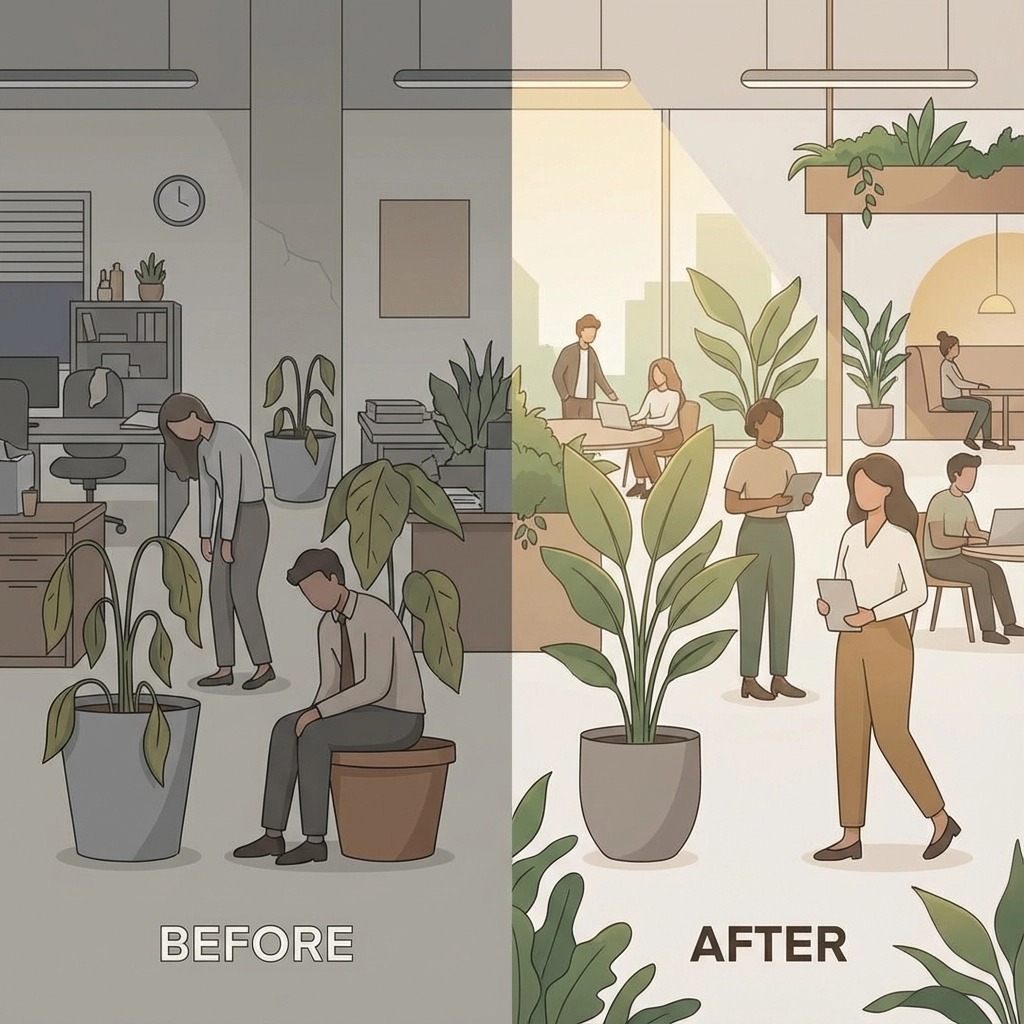
Culture rot isn't some abstract HR concept: it's a real, measurable threat to your business. When more than half your workforce is mentally gone, you're operating at a fraction of your potential.
The companies that thrive are the ones that close the gap between what they say and what they do. They communicate honestly, even when it's uncomfortable. They invest in their people, even when budgets are tight.
Most importantly, they understand that culture isn't something you have: it's something you do, every single day, in every single decision.
Your culture is rotting right now. The question is: What are you going to do about it?
What signs of culture rot are you seeing in your workplace? Drop us a line and share your story( you're definitely not alone.)