You know that sound, the polite knock on the office door, followed by the nervous clearing of throat and the tentative "Um, do you have a minute?" It's the sound of an employee who desperately needs to talk but is already regretting walking down this hallway.
That sound? It's getting rarer every day.
According to recent workplace studies, 59% of employees won't speak up to leadership even when they have serious concerns. And those open door policies that companies love to brag about in their employee handbooks? They're not just failing: they're becoming a cruel joke that makes the silence even louder.
The Great Open Door Illusion
Let's get real about what's happening here. Your company probably has an open door policy. It's probably mentioned in orientation, referenced in management training, and maybe even posted somewhere with a smiling stock photo of diverse people having a "productive conversation."
But here's the raw truth: having an open door policy and having employees who actually use it are two completely different universes.

"I was told about the open door policy on my first day. Three years later, I've never seen anyone walk through that door without getting quietly managed out within six months." : Anonymous employee survey response
This isn't just about bad managers (though there are plenty of those). This is about a fundamental disconnect between what leadership thinks they're offering and what employees actually experience when they try to speak up.
Why Your Open Door Is Actually a Revolving Door to Nowhere
1. The Hierarchy Minefield
Even when your boss says their door is open, employees know better. They've watched what happens to the people who actually use that invitation. Going over your direct manager's head: even to an officially "open" door: feels like career suicide with extra steps.
"Sure, talk to my boss's boss about how my boss is incompetent. What could go wrong?" That's the internal dialogue running through most employees' heads when they consider speaking up.
2. The Trust Crater
You know what kills open door policies faster than anything? When employees share genuine concerns and watch absolutely nothing change. Or worse: when they share something in confidence and suddenly find themselves having "performance conversations" two weeks later.
Trust, once broken in the workplace, doesn't heal with team-building exercises and motivational posters. It dies a very public death, and everyone else takes notes.
3. The Retaliation Reality
Let's talk about the elephant wearing a business suit in the room: retaliation. Not the obvious, lawsuit-worthy kind (though that happens too), but the subtle, plausibly deniable kind that's impossible to prove but devastating to experience.
Suddenly your projects get "reprioritized." Your contributions in meetings get overlooked. Your name stops coming up for interesting assignments. It's death by a thousand papercuts, and everyone watching learns the lesson loud and clear.

4. The Lip Service Problem
Many open door policies exist purely as legal protection and PR spin. They're corporate theater designed to make leadership feel good about their "accessibility" while providing zero actual infrastructure for meaningful dialogue.
When was the last time your company's leadership asked employees why they're not using the open door? When did they audit whether the policy actually works for anyone besides the lawyers who drafted it?
The Real Damage: What Silence Costs Your Organization
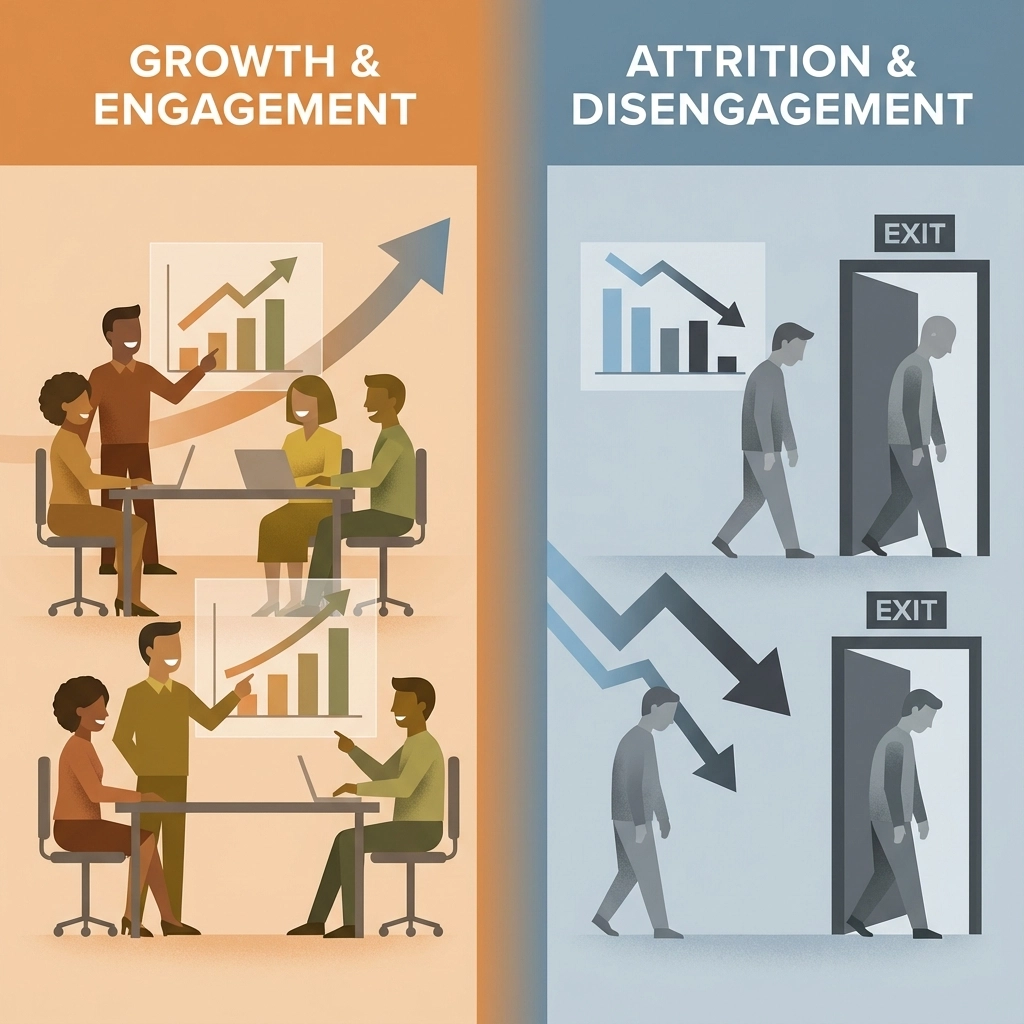
This isn't just about hurt feelings or corporate culture buzzword bingo. When employees won't speak up, your organization hemorrhages value in ways that show up on actual spreadsheets:
Innovation dies first. The best ideas often come from the people closest to the actual work: but not if they've learned that sharing ideas is career-limiting.
Problems compound. That small issue that could have been fixed with a conversation becomes the massive crisis that requires consultants, emergency meetings, and damage control.
Talent bleeds out. Your best people don't stick around to fix cultures that punish honesty. They leave for places where their voice actually matters, taking their institutional knowledge with them.
Customer experience suffers. Frontline employees stop flagging problems they see with products, services, or processes because they've learned that bringing up issues makes them the problem.
The Cold, Hard Numbers
Beyond our 59% statistic, the research on workplace silence is devastating:
- 85% of employees report feeling unable to raise concerns with management
- Only 3 out of 10 workers believe their opinions count at work
- Companies with effective voice mechanisms see 12% higher productivity and 27% lower turnover
These aren't just numbers: they're a referendum on leadership effectiveness across entire industries.
What Actually Works: Real Solutions for Real Leaders
If you're ready to move beyond the open door policy theater, here's what actually creates psychological safety and genuine dialogue:
Anonymous Feedback Systems That Matter
Not suggestion boxes that become organizational graveyards, but systems where concerns get addressed publicly (without identifying the reporter) with specific action plans and timelines.
Regular Skip-Level Meetings
Scheduled, structured conversations between senior leadership and employees two levels down. Make them routine, not crisis-driven.
Protected Feedback Channels
Create formal processes where employees can raise concerns through HR or third-party systems without fear of manager retaliation.
Visible Follow-Through
When someone speaks up, show the entire organization what happened as a result. Share the outcomes, the changes made, and the lessons learned.
Manager Accountability
Track which managers have employees who speak up versus those who don't. Make "creating psychological safety" a measurable performance metric.
The Bottom Line: Your Move, Leadership
The death of open door policies isn't about doors: it's about trust, safety, and genuine commitment to hearing hard truths. As we've explored before, access without safety is just another layer of corporate theater.
Here's your reality check: If 59% of your employees won't speak up, it's not because they don't have opinions, concerns, or ideas. It's because they've learned that speaking up is dangerous to their livelihood, their sanity, or both.
The question isn't whether open door policies are dead: it's whether you're brave enough to build something real in their place.
What's your experience with speaking up at work? Have you seen open door policies actually work, or are they just another corporate myth? Drop your stories in the comments: anonymously, if that tells us everything we need to know about your workplace.