You know that sinking feeling when your boss says "we're all family here" during the same meeting where they announce another round of layoffs? That pit-in-your-stomach moment when you realize the company values poster in the break room might as well be toilet paper?
Yeah. We need to talk about that.
Because here's the thing leadership experts don't want to admit: the retention crisis isn't some mysterious phenomenon that requires expensive consultants and year-long culture initiatives to solve. It's simpler, and more damning, than anyone wants to acknowledge.
The Numbers Don't Lie (Even When Leaders Do)
Let's start with the brutal truth: only 21-23% of U.S. employees strongly trust their organization's leadership.
Read that again. In a room of 10 employees, maybe two actually believe what their leaders tell them. The other eight? They're mentally checking out, updating their LinkedIn profiles, or straight-up planning their exit strategy.
This isn't just about "engagement surveys" showing slightly lower scores. This is about a fundamental breakdown in the most basic requirement of any functional relationship: trust.

"I stopped believing anything my manager said after the third time they promised a promotion that never came. Now I just nod and smile while I job hunt." – Sarah, Marketing Manager
And here's the kicker, this number has actually declined since 2019. We're moving in the wrong direction, fast.
The "Secrets" That Aren't Really Secrets
So what are these earth-shattering revelations that leadership experts allegedly don't want you to know? Brace yourself, because they're shockingly… obvious:
Secret #1: Transparency Is Dead (And Leaders Killed It)
The biggest driver of the trust crisis? Lack of transparency. Shocking, right?
Employees are kept in the dark about business decisions that directly affect their jobs, their teams, and their futures. Then leadership acts surprised when people start assuming the worst and making plans accordingly.
The official story: "We're carefully evaluating all options and will communicate updates as they become available."
The reality: "We made this decision three months ago but haven't figured out how to spin it yet."
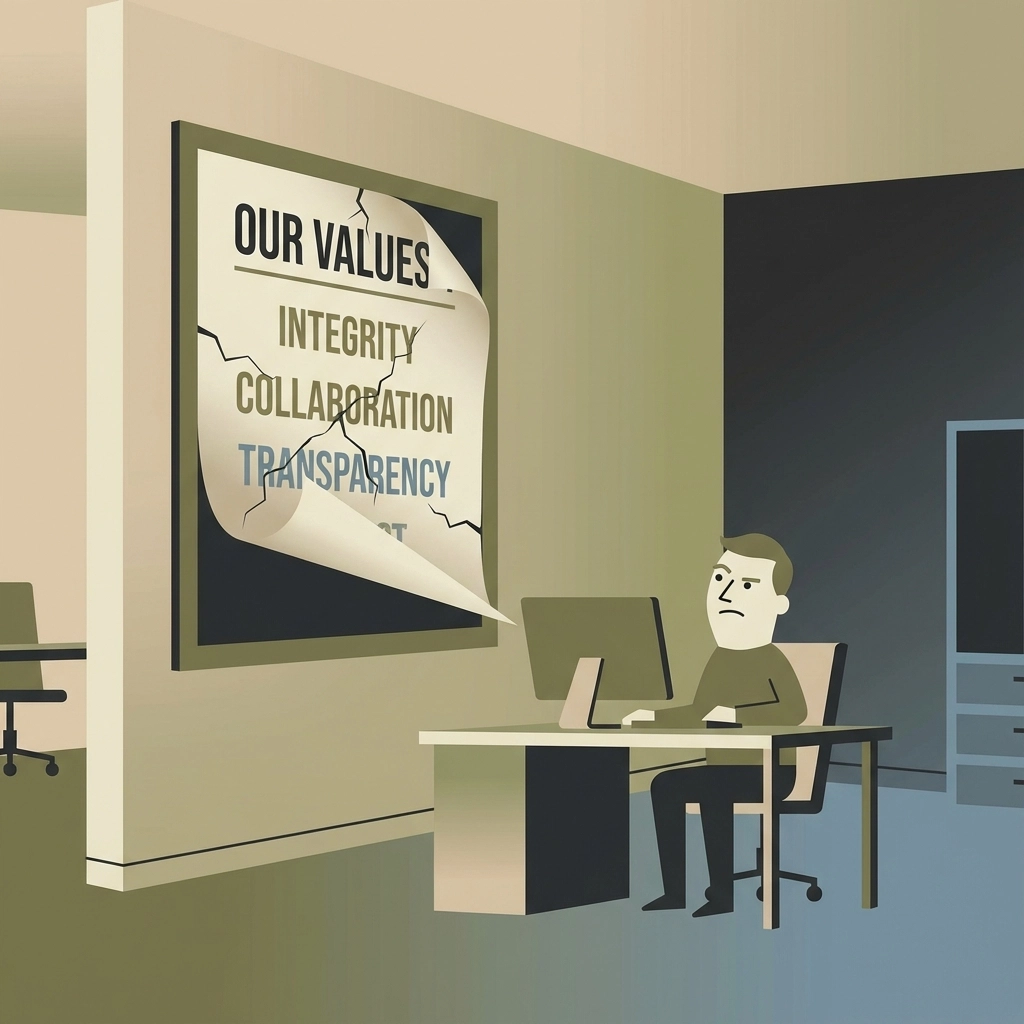
Secret #2: Values Are Just Wall Decorations
Here's another mind-blowing revelation: inconsistent alignment between stated organizational values and actual leadership actions destroys trust faster than you can say "synergy."
When your company values include "integrity" and "respect for people," but leadership regularly throws employees under the bus to save face with clients? Yeah, people notice that.
Secret #3: Promises Are Meaningless
Broken promises regarding promotions, raises, performance reviews, and career development don't just disappoint employees: they actively teach them that leadership's word is worthless.
"They told me if I took on the extra project, a promotion would follow. That was eighteen months and three 'extra projects' ago." – Marcus, Operations Specialist
The most insidious part? Leaders often forget they even made these promises, while employees remember every single one.
Secret #4: Job Security Is an Illusion
Job insecurity and burnout aren't just byproducts of tough economic times: they're often the direct result of poor leadership decisions and communication.
Constant restructuring, undefined roles, impossible deadlines, and the ever-present threat of "optimization" (corporate speak for "we might fire you") create a work environment where people feel like they're standing on quicksand.
Add in the growing anxiety about AI and technology adoption replacing human workers, and you've got a workforce that's basically in survival mode 24/7.
The Real Cost of Broken Trust
The retention consequences aren't just "people seem less enthusiastic in meetings." They're measurable, devastating, and expensive:
- High turnover rates spike by 20% following trust crises
- 55% of employees disengage entirely when trust breaks down
- Diminished productivity becomes the new normal
- Difficulty attracting new talent as your employer reputation goes down the drain
But here's what really stings: when employees mentally check out, they don't just stop trying. They start actively protecting themselves from an organization they can no longer trust.

They stop volunteering for projects. They stop sharing innovative ideas. They stop caring about outcomes beyond their immediate job security. And who can blame them?
The Solutions Hiding in Plain Sight
Here's the part that should make every leader uncomfortable: the solutions aren't complicated. They don't require expensive software, lengthy training programs, or cultural transformation initiatives.
They require something much harder: actually doing what you say you're going to do.
Start With Radical Transparency
Stop treating employees like children who can't handle the truth. If there are challenges, explain them. If there are changes coming, give people time to prepare. If you don't know something, admit it instead of making something up.
"My new manager tells us exactly what's happening with the budget, the client situation, even the stuff that's not great. It's scary sometimes, but I trust her completely." – Jennifer, Project Coordinator
Keep Your Promises (Or Explain Why You Can't)
When you tell someone they're getting a promotion, a raise, or additional support: follow through. If circumstances change and you can't deliver, explain what happened and what you're doing about it.
Revolutionary concept, right?
Empower Your Middle Managers
Your front-line managers are either trust-builders or trust-destroyers. Give them the communication training, decision-making authority, and support they need to be the former.
When managers can actually support their teams through change with clear vision and explanation, employees are 11 times more likely to trust leadership decisions.

Address the Elephant in the Room
Stop pretending everything is fine when it's not. If there's anxiety about job security, layoffs, or technology changes, address it directly. Create clear pathways for career development that don't require employees to guess what you want from them.
The Uncomfortable Truth
The real "secret" isn't what leadership experts are hiding: it's that most organizations know exactly what they need to do to build trust, but they're not willing to do it consistently.
Because real transparency means admitting mistakes. Keeping promises means making fewer of them and being more careful about the ones you do make. Supporting employees through change means slowing down the pace of change to ensure people can actually adapt.
And let's be honest: that's harder than buying pizza for the break room and calling it "culture."

Where the Rubber Meets the Road
The retention problem isn't mysterious. It's not about generational differences, remote work challenges, or economic uncertainty.
It's about trust. And trust isn't built through grand gestures or company retreats or elaborate wellness programs.
It's built through consistent, day-to-day actions that demonstrate respect for employees as human beings who deserve honesty, follow-through, and basic consideration.
The question isn't whether you can solve the retention problem. The question is whether you're willing to look in the mirror and acknowledge that you might be the problem.
What's your experience with trust in the workplace? Have you seen leaders who actually follow through on their promises? What would it take for you to truly trust your organization's leadership? Share your thoughts: because this conversation is too important to keep to ourselves.